Kitchen Granite and Marble Design: Countertop Ideas
The countertop takes the heat of the kadhai, the stain of haldi and the knock of the pressure cooker every day. Here is how granite, quartz and marble compare for Indian kitchens, and which colours work best.
- Indian granite
- ₹150 to 500 per sq ft, material (NoBroker, 2026)
- Standard quartz
- ₹250 to 1,200 per sq ft (NoBroker, 2026)
- Fabrication and fitting
- Adds ₹150 to 400 per sq ft (NoBroker)
- Granite sealing
- Every 1 to 2 years (NoBroker)
- Counter depth
- About 600 mm (Studio Matrx)
18 Kitchen Granite and Marble Design ideas
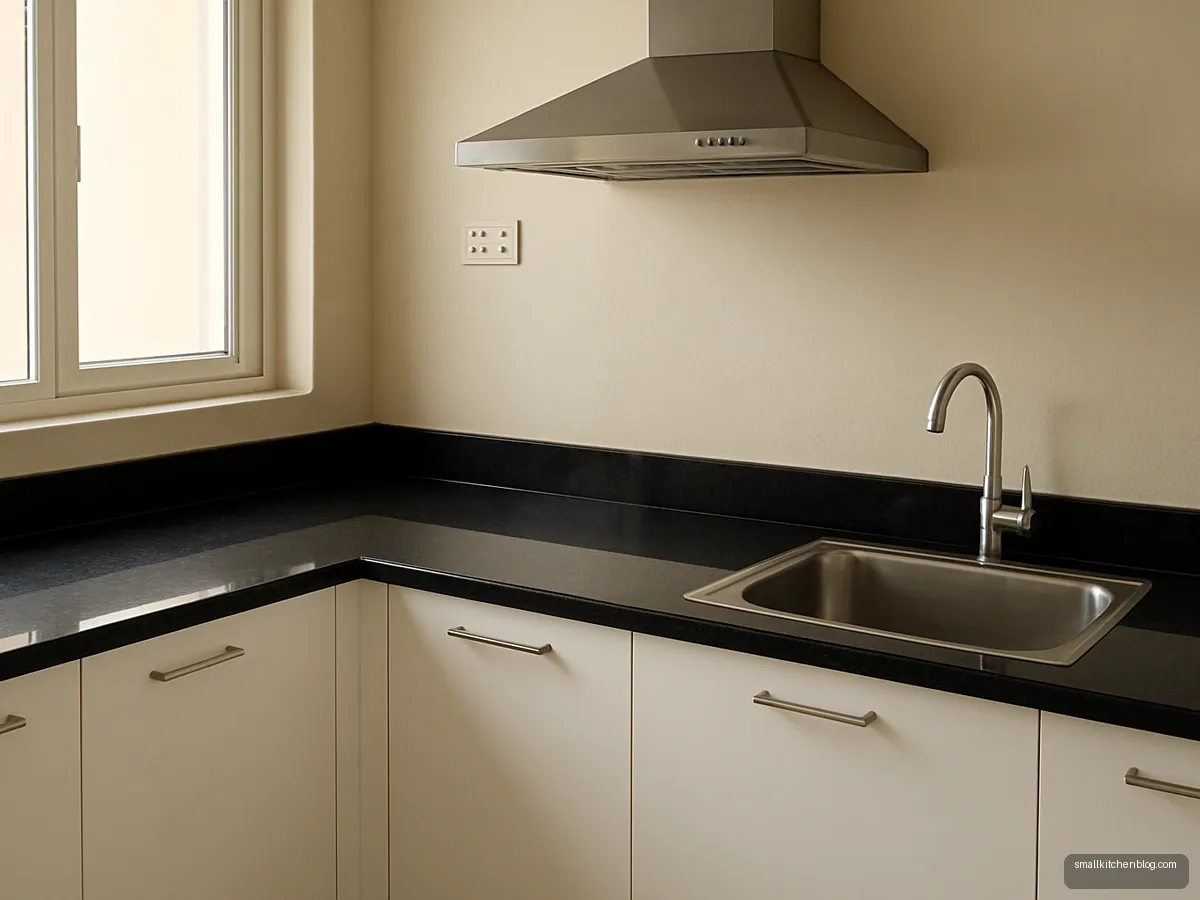
Jet Black Granite Platform
Jet black granite is the classic Indian platform: it hides oil and haldi stains and takes a hot kadhai. Ask for a leathered finish if you dislike visible water spots.
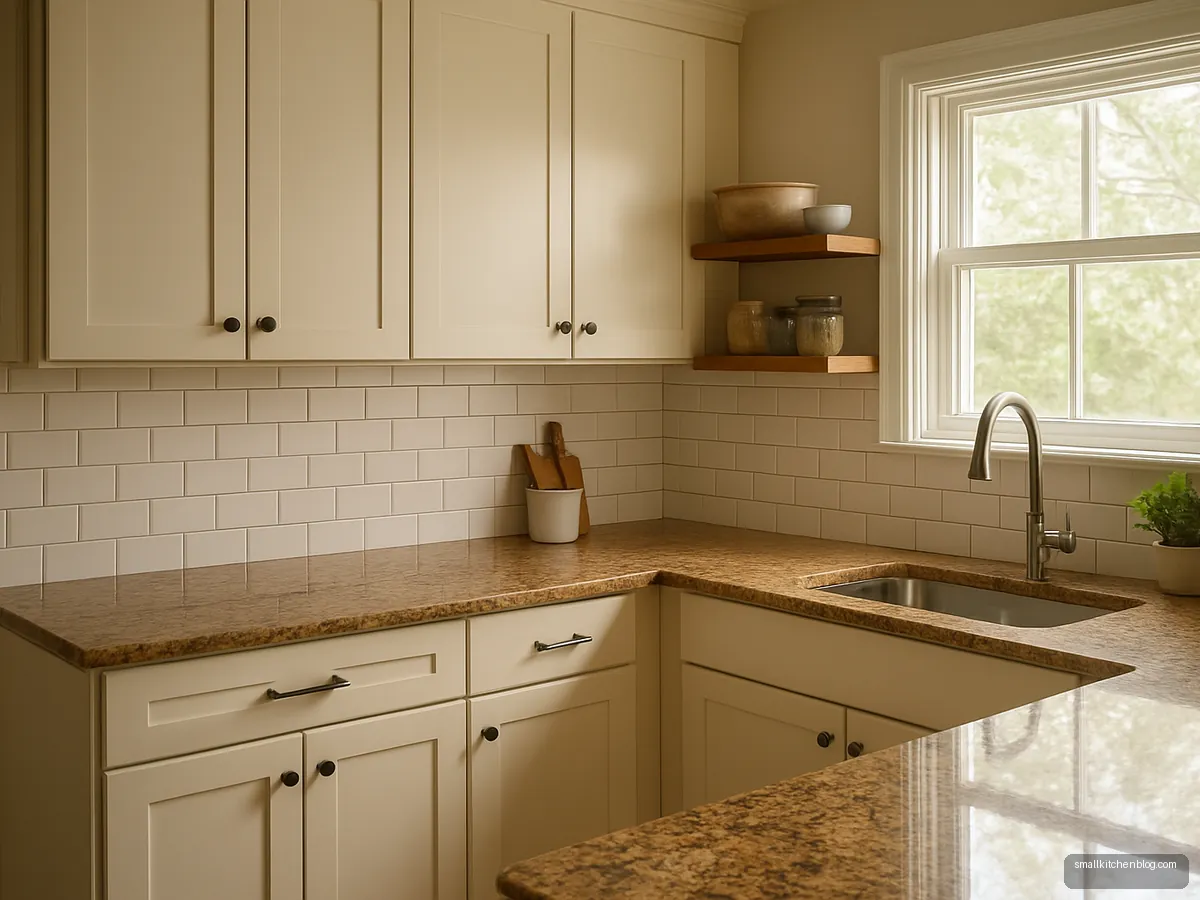
Tan Brown Granite Kitchen
Tan brown granite with its dark speckles pairs well with wooden and cream cabinets. It is widely available and forgiving of spills. Seal it every year or two to keep oil from soaking in.
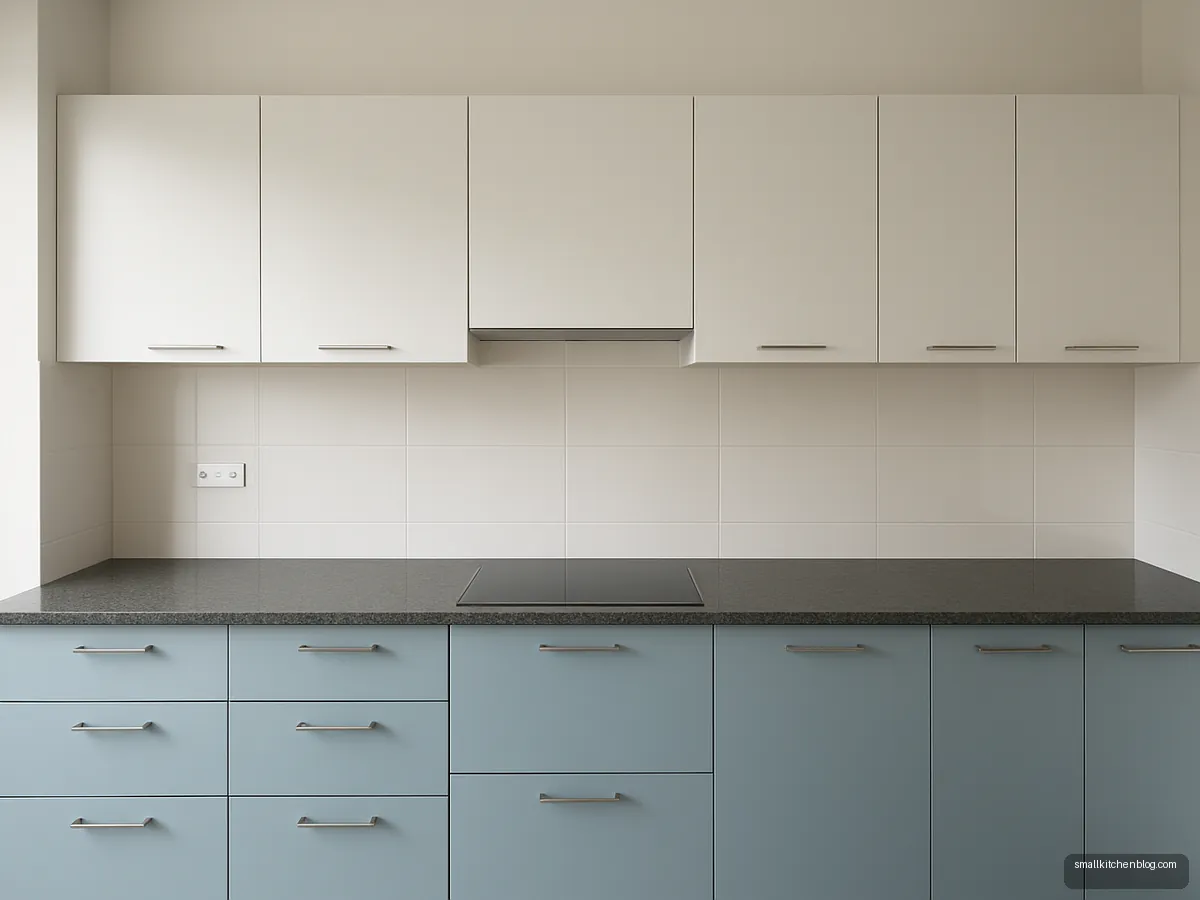
Steel Grey Granite Run
Steel grey granite looks modern and hides crumbs and marks well. Pair it with white or pale blue shutters for a crisp look. A polished finish is easiest to wipe after cooking.
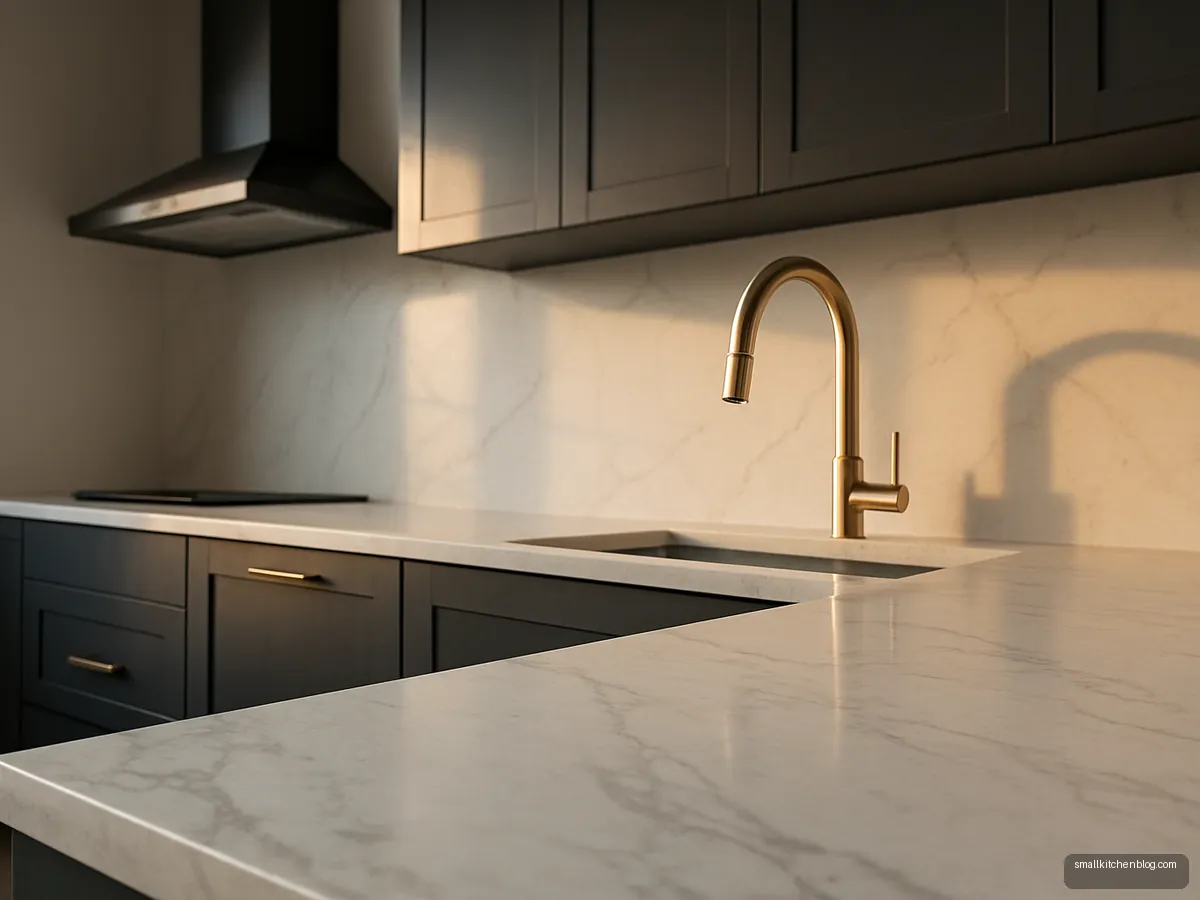
White Quartz With Grey Veins
Marble-look quartz gives the veined look without the sealing. Use trivets for hot pans, since the resin can discolour. It suits lighter cooking and homes that want a calm, bright look.
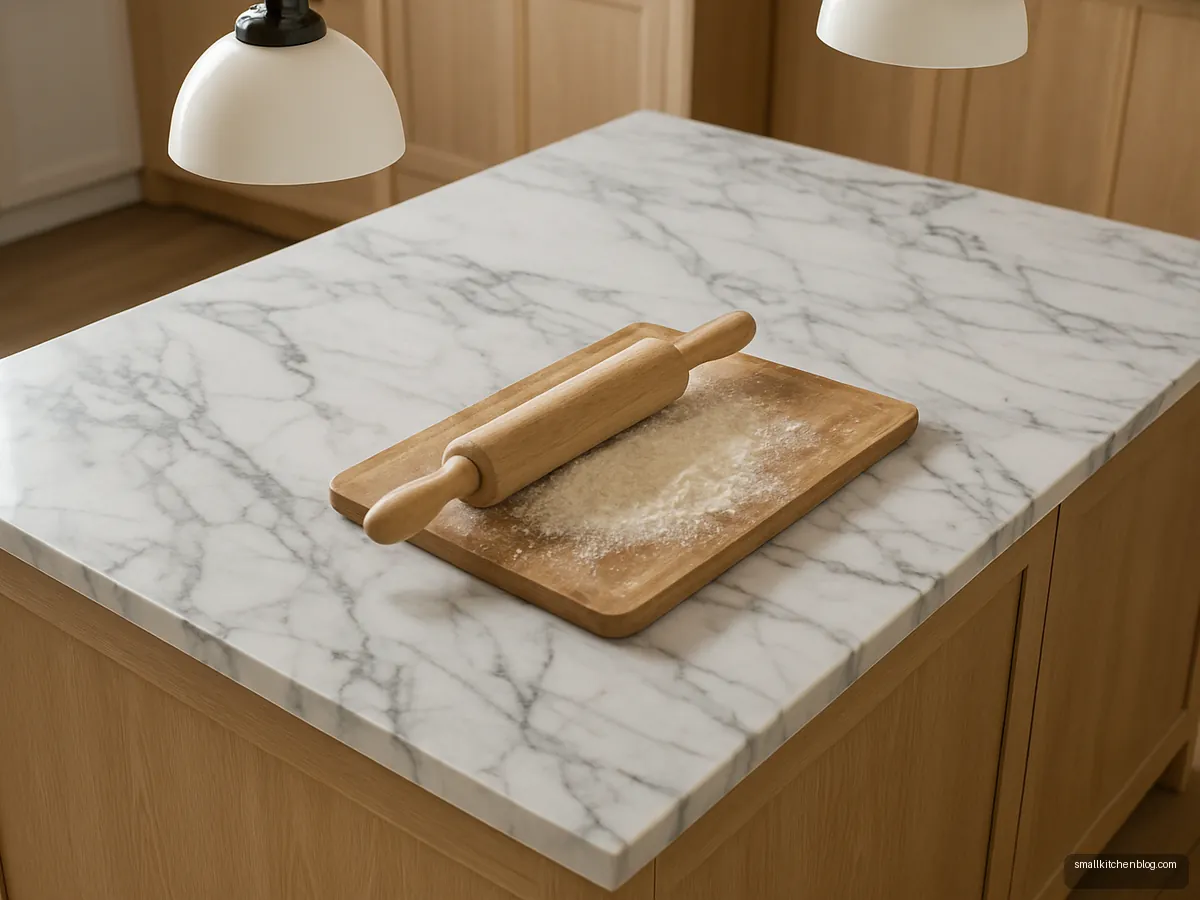
Italian Marble Island Top
Marble feels cool and elegant on an island used for rolling rotis and baking. Expect etching from lemon and tomato, and keep a board ready.
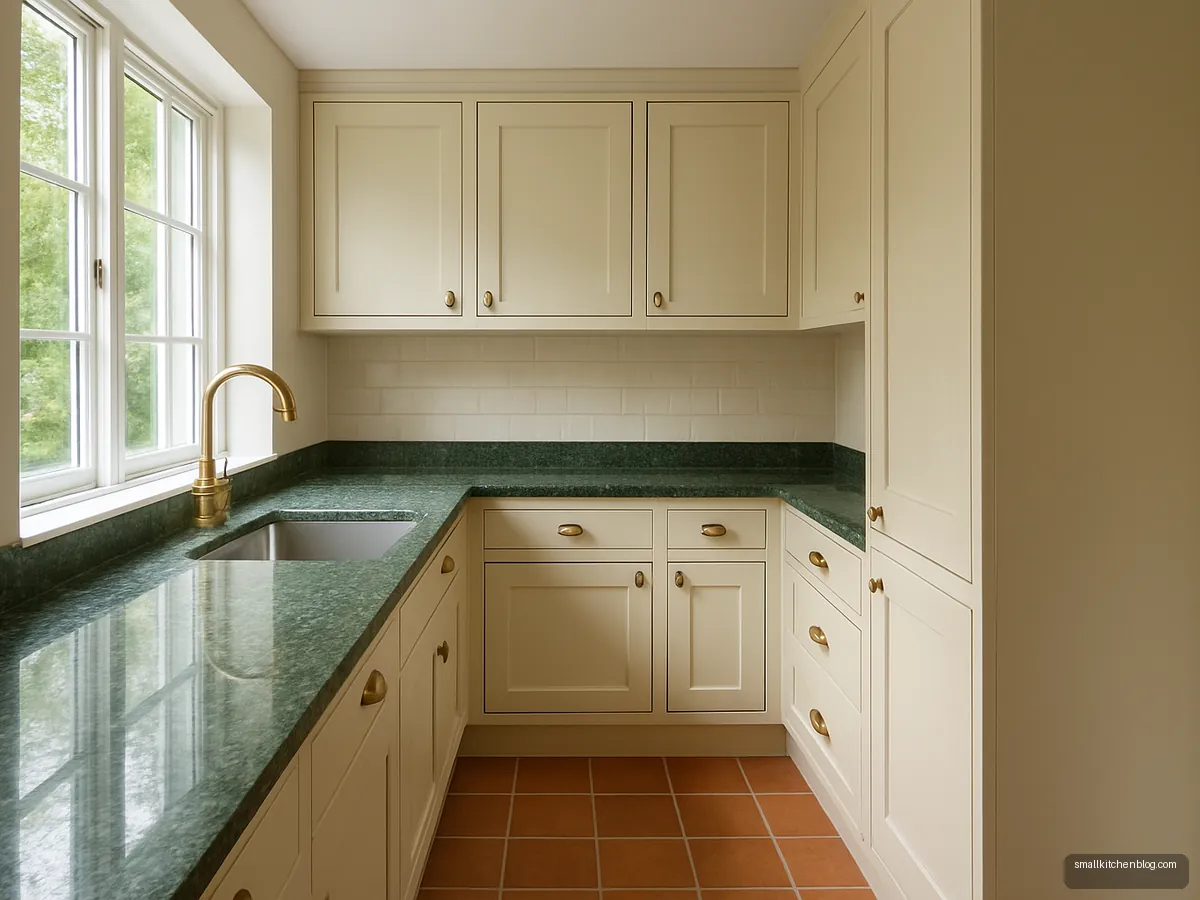
Green Granite Countertop
Deep green granite gives a rich, earthy look that suits classic and South Indian homes. It pairs well with brass fittings. Keep the walls light so the green stone stays the hero.
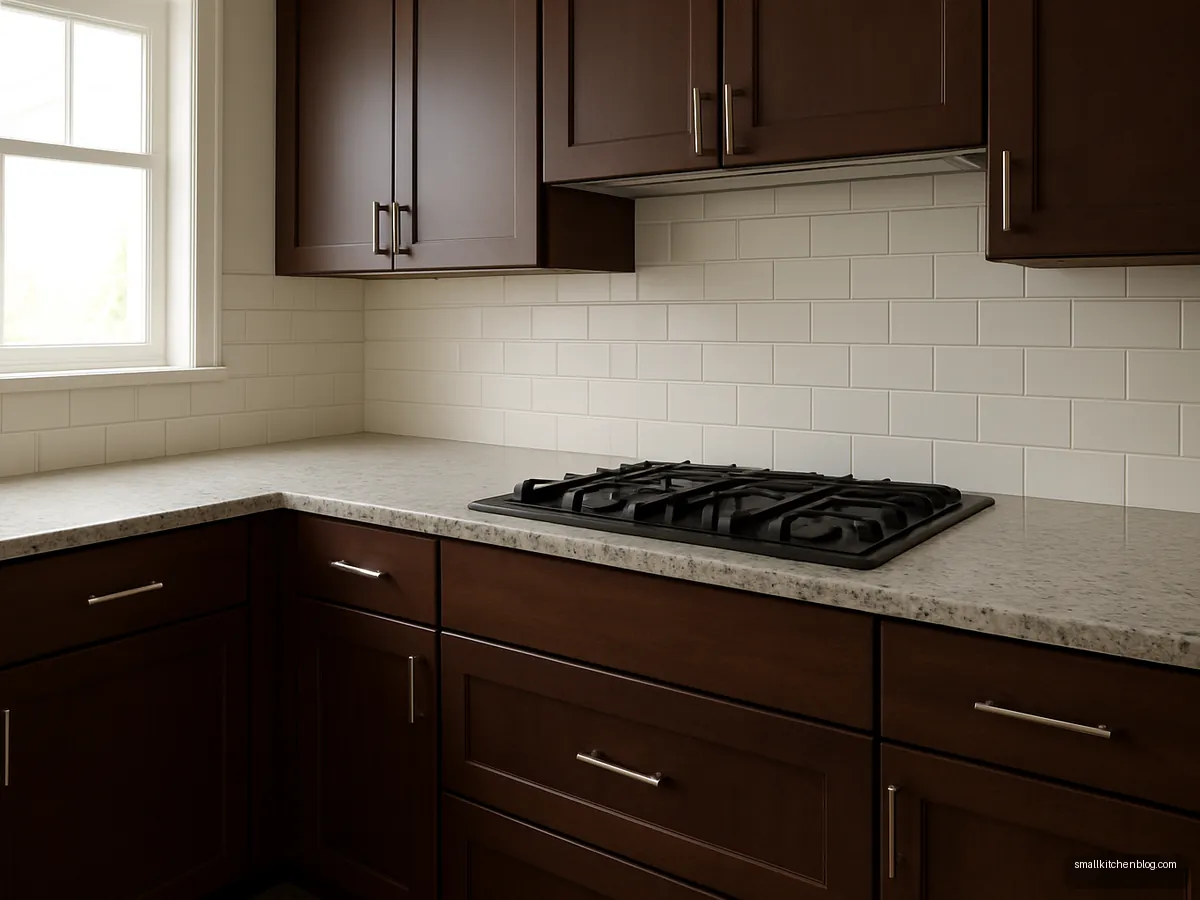
Kashmir White Granite
Kashmir white granite is light with grey and burgundy specks. Seal it well since light stones show turmeric if left on the surface. Dark cabinets make it stand out.

Leathered Black Granite Finish
A leathered finish has a soft texture that hides fingerprints and water marks. It suits busy cooks who hate wiping constantly. Reseal when water stops beading on the surface.

Pure White Quartz Compact Kitchen
A pure white quartz top bounces light in a small kitchen. It needs no sealing, but heat protection still matters. Use a cutting board to protect the surface from knife marks.
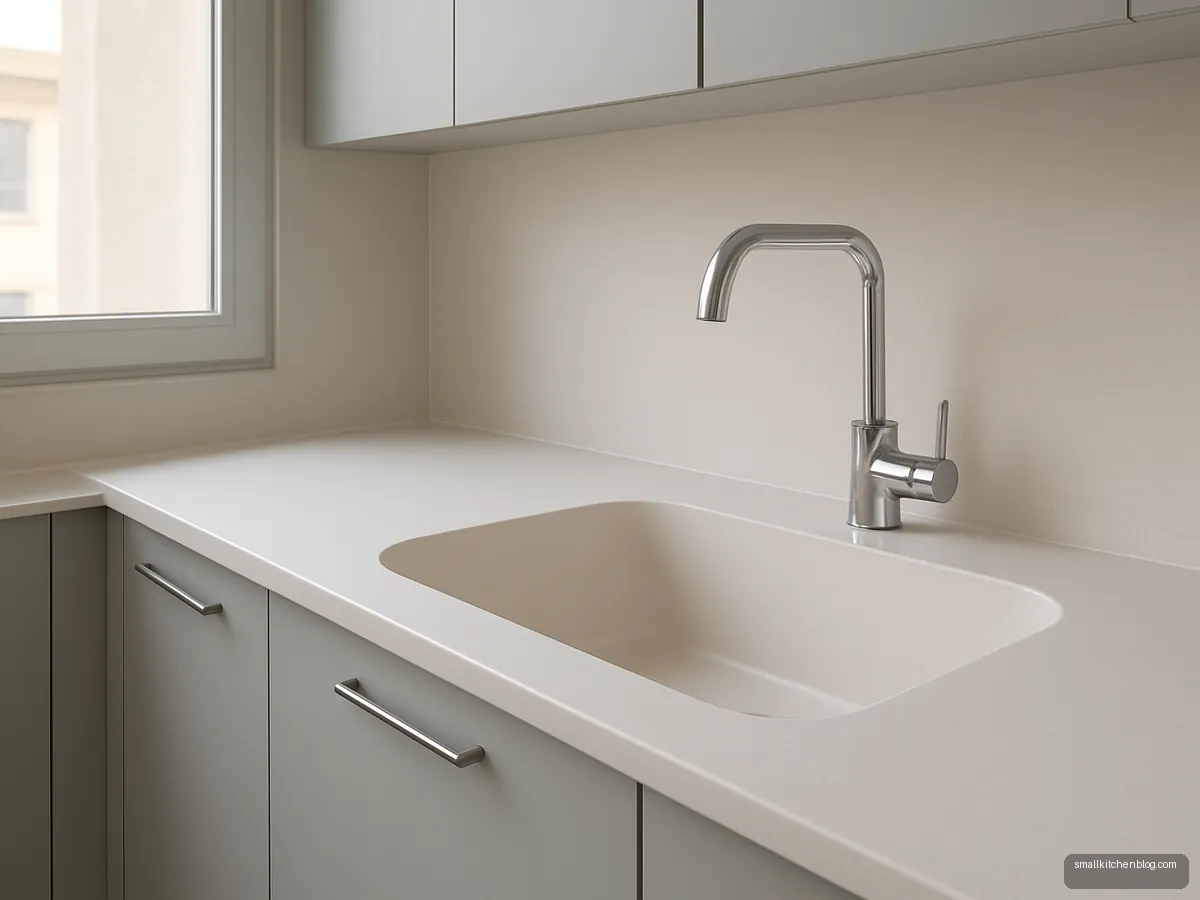
Solid Surface Seamless Sink
Solid surface counters can carry an integrated sink with no joint. Minor matte scratches can be sanded out, as DuPont's guide explains. It is not heat-proof, so trivets are a must.
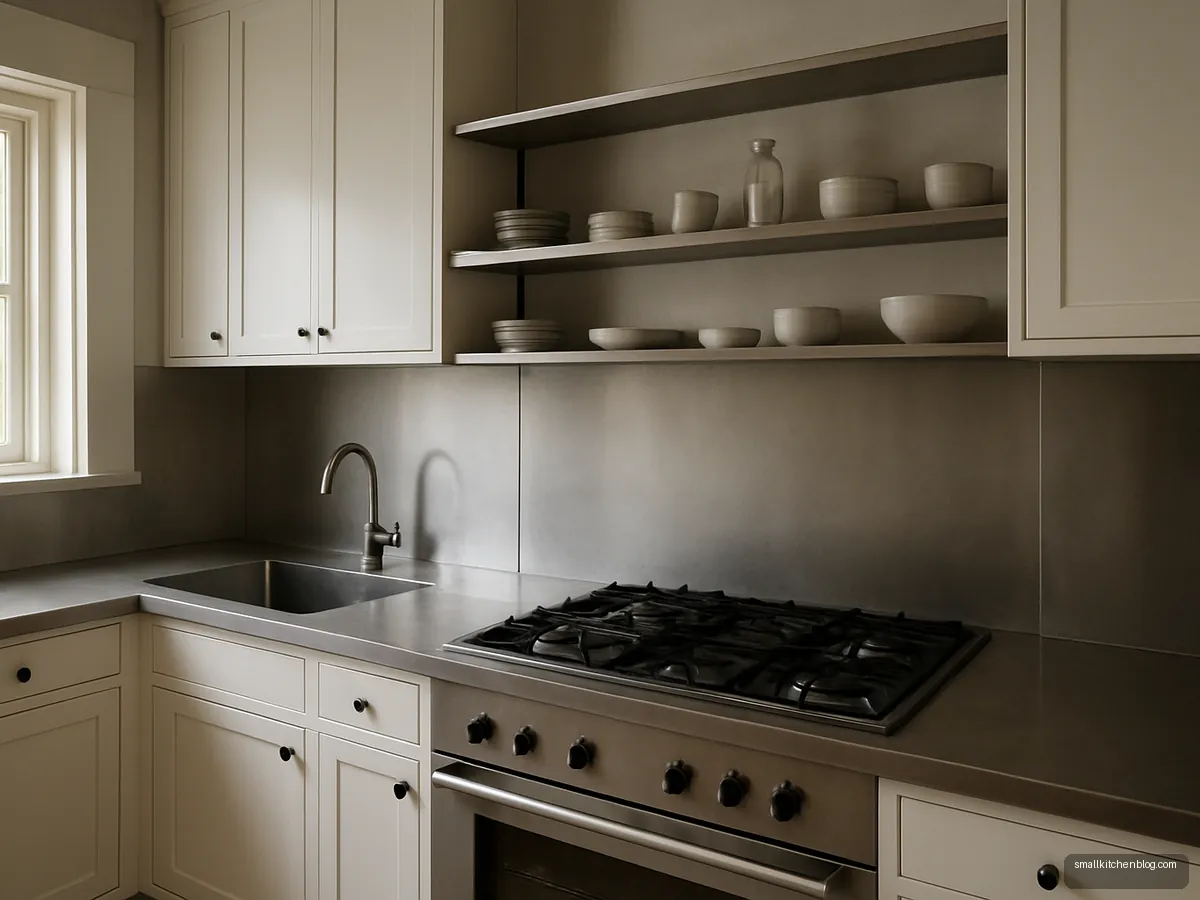
Stainless Steel Worktop
A stainless steel worktop is heat and stain resistant, popular with serious cooks. It scratches over time and develops a patina. Clean along the grain to keep it looking even.
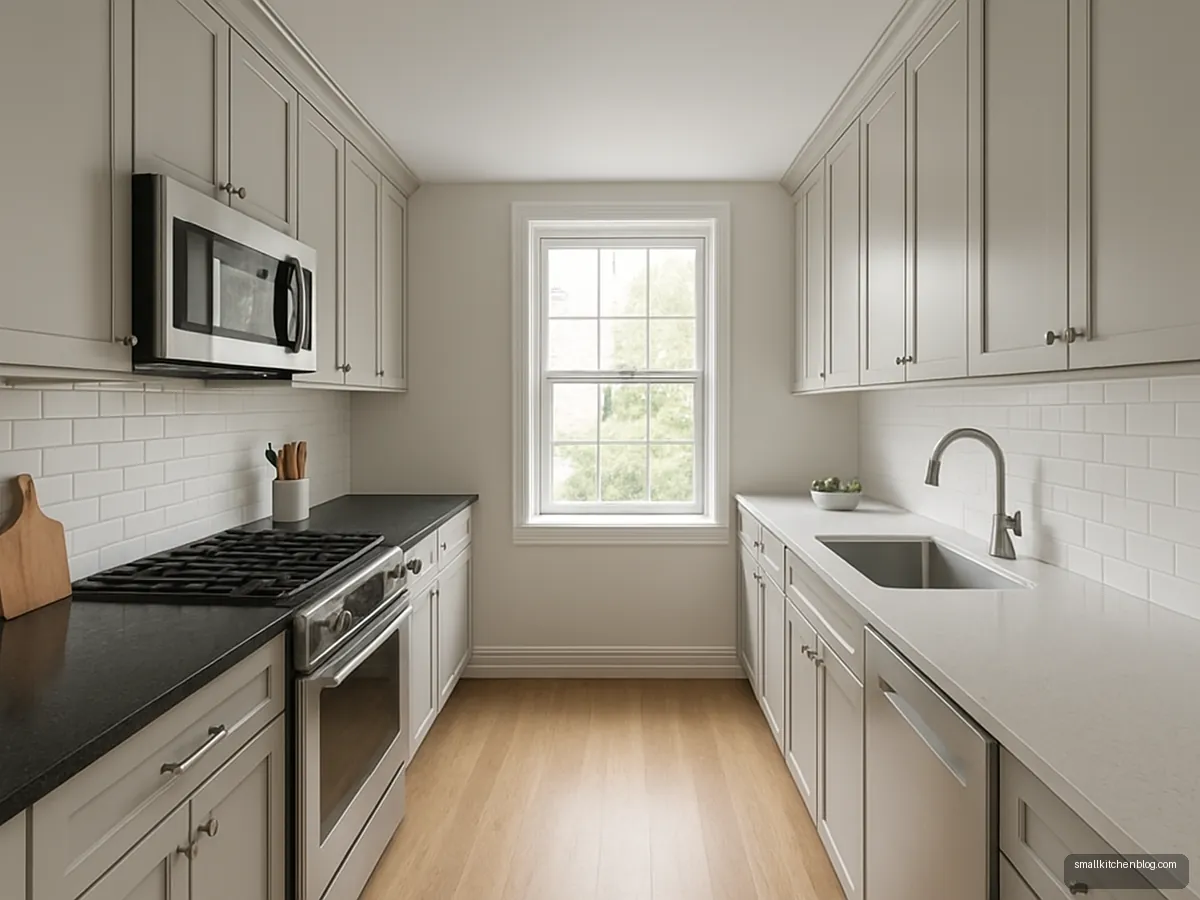
Two-Stone Counter Combination
Use granite on the cooking side and quartz on the prep side. You get heat resistance where it matters and a clean look elsewhere. Keep the joint away from the sink.
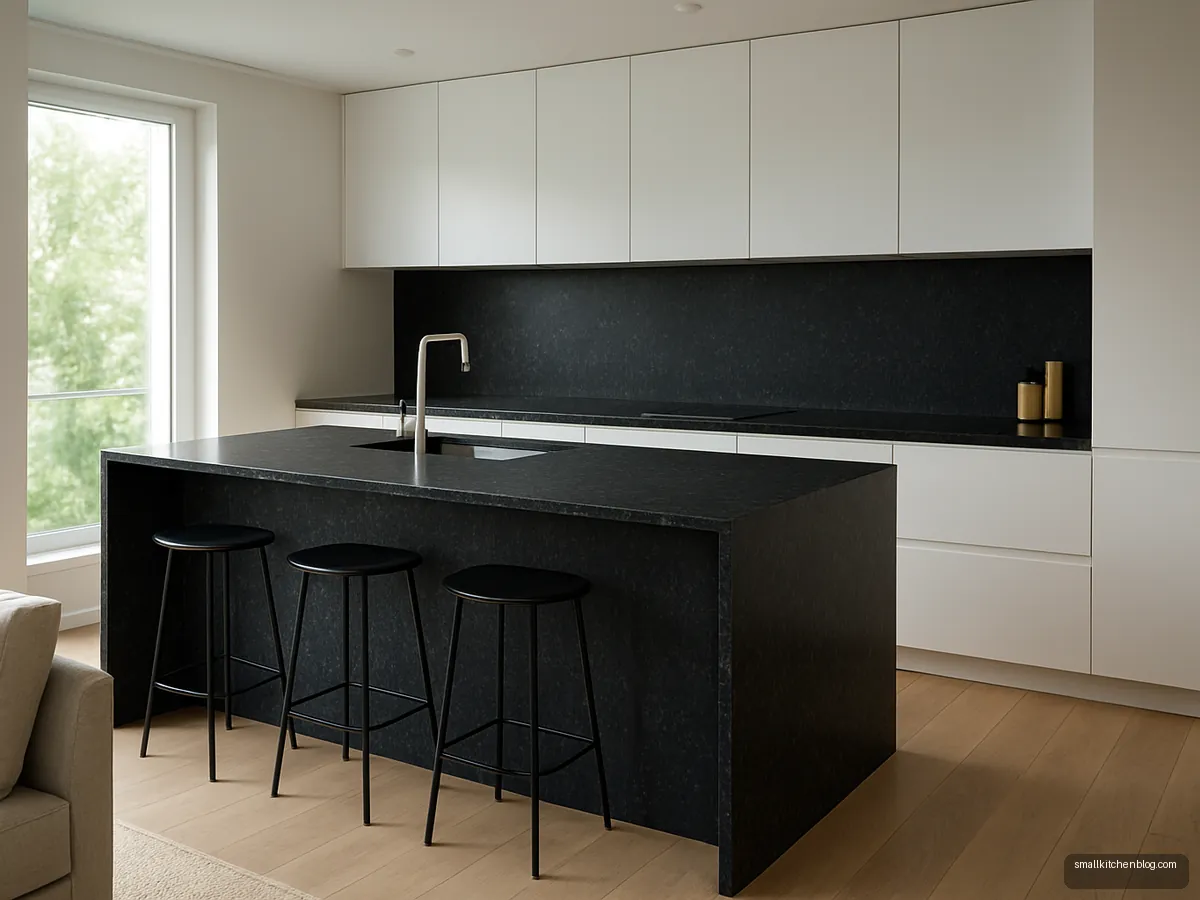
Waterfall Granite Edge
A waterfall end where the granite drops to the floor gives a premium finish on an open counter. Use a mitre joint for a clean corner.

Beige Granite With Bullnose
Beige granite with a rounded bullnose edge is safer with children around. It also wipes clean without chipped sharp corners. Beige also hides dust well in dry cities.
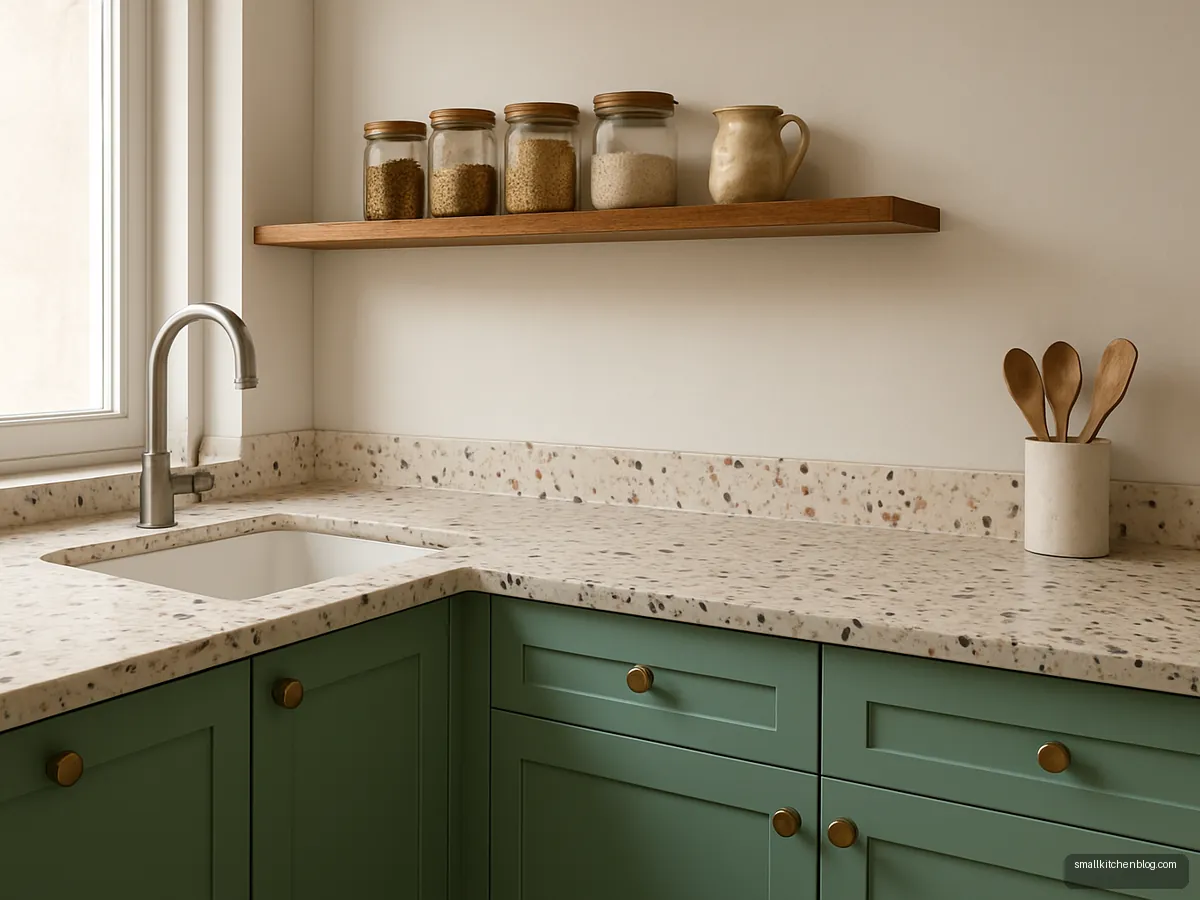
Terrazzo Countertop
Terrazzo brings colourful chips and an Indian heritage feel. Seal it like marble and avoid acidic cleaners. Chips in your cabinet colour tie the scheme together nicely, and a honed finish keeps it from feeling too shiny.
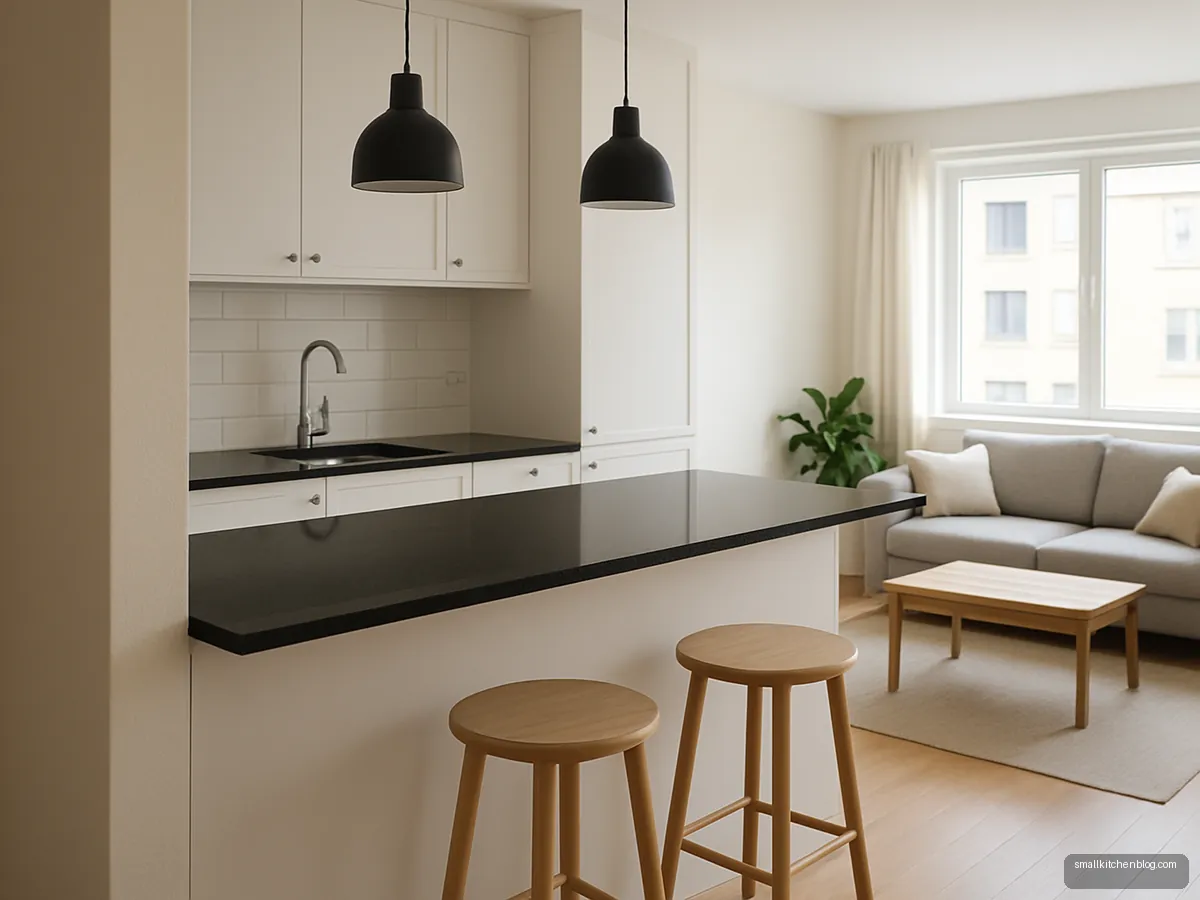
Absolute Black Breakfast Ledge
A granite ledge on the hall side gives a durable spot for chai and homework. Granite's heat resistance handles hot cups easily. Round the outer corner if children use it.
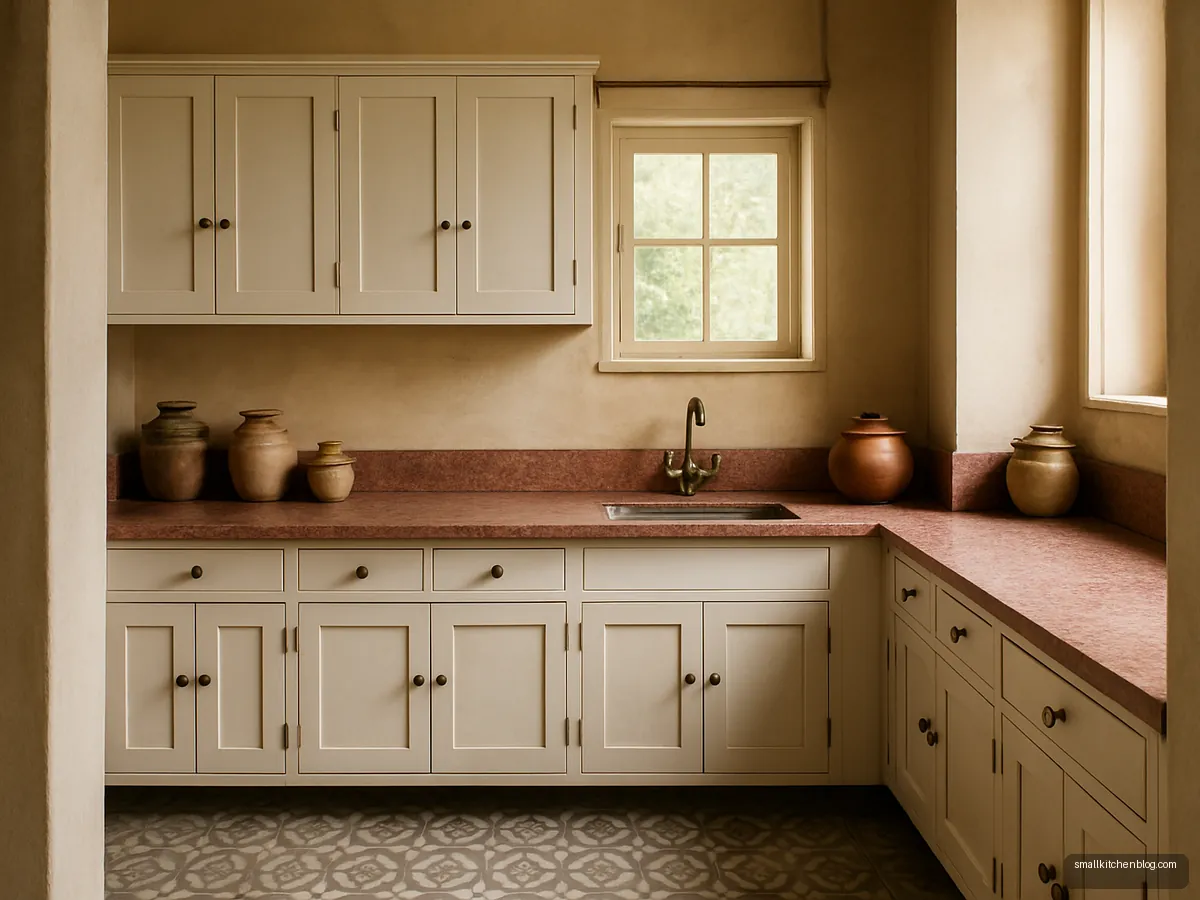
Rosy Pink Granite Classic
Rosy pink granite is an old-school favourite that is coming back in vintage kitchens. Pair with white and brass. It is often good value at local stone yards, so check before you dismiss it as dated.
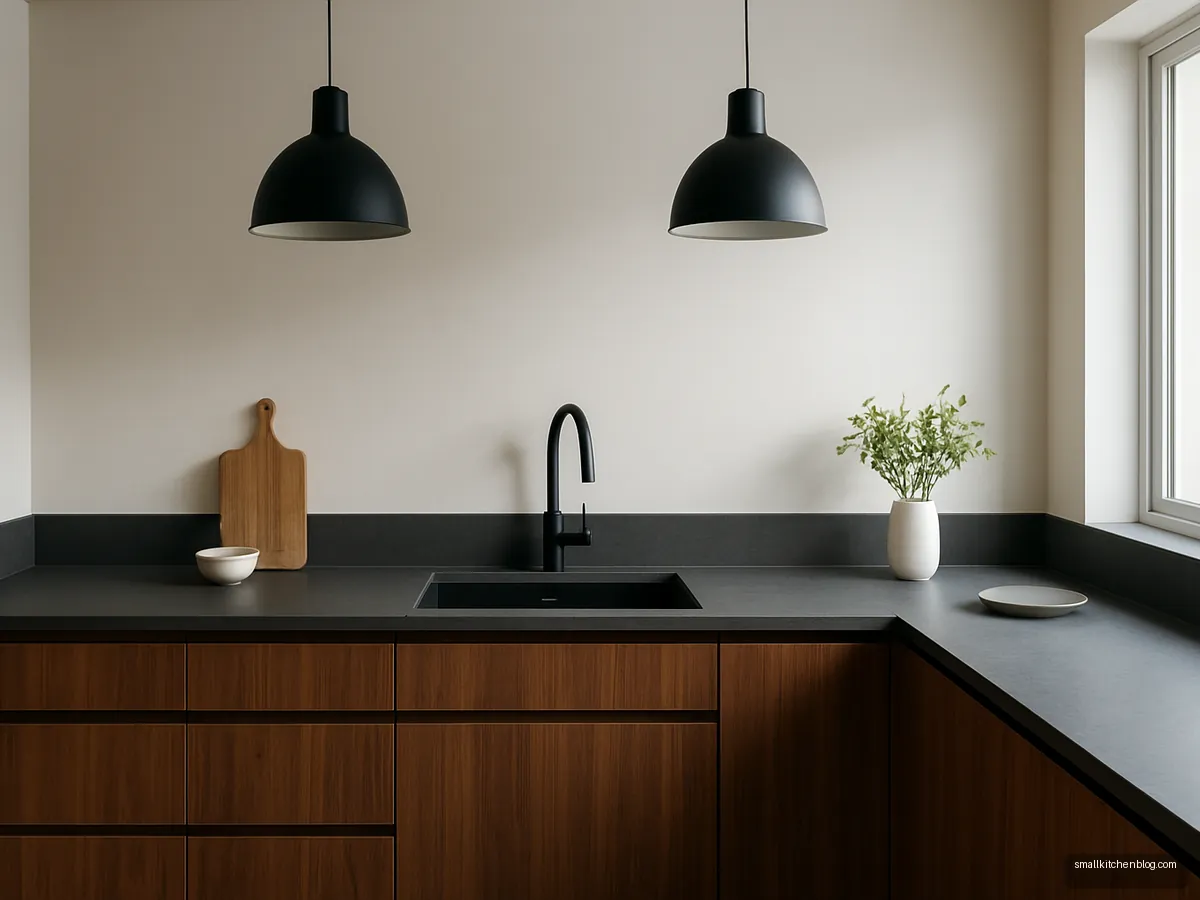
Honed Grey Quartz Counter
Honed quartz has a matte surface that looks like natural stone. It hides fingerprints better than polished quartz. Pair it with walnut for warmth, and use trivets near the hob.
Illustrative design concepts. Sizes, finishes and prices vary by maker and city, so confirm details with your designer or carpenter.
Ask any Indian kitchen fitter and the default answer is granite: it handles heat, it is cheap at the entry level and almost every city has a stone market. Quartz has become popular for its uniform look and zero sealing, while marble remains the dream finish that needs the most care.
This page compares the main countertop materials using maker and industry guidance, shows kitchen side granite design ideas in different colours and edge styles, and explains how to keep each surface looking good.
Granite vs quartz vs marble at a glance
| Material | Heat | Stains | Care | Price per sq ft (2026) |
|---|---|---|---|---|
| Indian granite | Excellent | Porous, needs sealing | Seal every 1 to 2 years | ₹150 to 500 |
| Quartz | Moderate | Non-porous | No sealing; use trivets | ₹250 to 1,200 |
| Marble | Good | Stains and etches | Regular maintenance | Varies widely |
| Solid surface | Not heat-proof | Non-porous | Scratches sandable | Not sourced |
Granite and quartz figures are NoBroker's material-only ranges (June 2026); fabrication and installation add ₹150 to 400 per sq ft. NoBroker rates granite at Mohs 6 to 7 and quartz at 7 to 8. Design Cafe gives granite at ₹160 to 350 and quartz at ₹280 to 450 including installation.
Why granite suits Indian cooking
Granite is a natural igneous stone with excellent heat resistance, so a hot kadhai or tava set down for a moment does no harm. Dark granites hide oil and turmeric. The catch is porosity: NoBroker advises sealing every one to two years, and MSI Surfaces suggests resealing when water stops beading on the surface. For most families who do heavy tadka cooking, granite is the safe choice. Indian granite is also easy to source and repair: a chipped edge can usually be filled and polished by a local stone worker in an afternoon.
When quartz or marble makes sense
Quartz is about 90 to 95 percent crushed quartz bound with resin. It is non-porous, so it needs no sealing, and comes in uniform colours. Caesarstone advises against putting pans hotter than 300°F (about 150°C) directly on it and recommends trivets. That suits lighter cooking or prep zones.
Marble is beautiful but Design Cafe notes it needs regular maintenance to prevent staining and etching. Many Indian homes use it on an island or serving counter rather than next to the hob. If you are planning one, see kitchen island design.
Choosing colour, finish and edge
Dark granites (black, steel grey, green) hide stains best. Light granites and white quartz brighten small kitchens but show turmeric if spills sit. Polished finishes are easiest to wipe; leathered and honed finishes hide fingerprints. For edges, a rounded bullnose is safer with children; a straight edge looks sharper. Match the stone to your cabinets using our kitchen colour combination ideas, and plan the platform height on the kitchen platform design page.
Cleaning and care, step by step
- Daily: wipe spills with a damp cloth (MSI for granite, Caesarstone for quartz).
- Weekly: mild dish soap and warm water, then rinse and dry.
- Avoid on granite: lemon, vinegar, bleach, glass cleaner and ammonia, which MSI says can etch. Use a pH-neutral cleaner and no abrasive pads.
- Avoid on quartz: abrasive sponges, oven and toilet cleaners and paint strippers; use a cutting board and trivets.
- Reseal granite when water stops beading, roughly every couple of years.
Planning the countertop with your kitchen
Studio Matrx gives a countertop depth of 600 mm with a 20 to 40 mm overhang over the cabinets. Ask your fabricator for a single slab on long runs to avoid joints near the sink, and order cut-outs for the sink and hob (Studio Matrx lists a 4-burner hob cut-out at 560 x 490 mm). Countertops are usually charged separately from cabinets, so ask for it as its own line in the quote. On a kitchen side wall with a window, consider running the granite up as a short upstand instead of tiles; it removes the grout line where water collects. For overall budgets see modular kitchen price and the kitchen sink design page.
Frequently asked questions
Which is better for an Indian kitchen, granite or quartz?
Granite handles heat better and is cheaper at entry level, which suits heavy tadka cooking. Quartz is non-porous and needs no sealing, but Caesarstone advises trivets for pans above about 150°C. Many families use granite near the hob and quartz on prep or serving counters.
Kitchen granite ka rate kya hai?
NoBroker's June 2026 guide lists Indian granite at about ₹150 to 500 per sq ft for material, with entry grades at ₹150 to 200, and fabrication plus installation adding ₹150 to 400. Design Cafe gives ₹160 to 350. Rates vary by city and stone, so check locally.
Which granite colour is best for a kitchen?
Dark granites such as jet black, steel grey and green hide oil and turmeric stains best and suit heavy cooking. Light granites like Kashmir white brighten a small room but need quick wiping. Choose based on your cabinet colour and how much daily cleaning you want.
Is marble good for a kitchen countertop?
Marble looks elegant but needs regular maintenance to prevent staining and etching, as Design Cafe notes. Lemon, tomato and vinegar can dull it. Many Indian homes use marble on an island or serving counter and keep granite near the hob.
How often should a granite countertop be sealed?
NoBroker suggests sealing every one to two years. MSI Surfaces gives a simple test: if water no longer beads on the surface and soaks in, it is time to reseal. Darker granites usually need it less often than light ones.
Can I keep a hot pressure cooker on a quartz counter?
Caesarstone advises against placing pans hotter than 300°F (about 150°C) directly on quartz and recommends a trivet, since the resin can discolour. A hot pressure cooker off the flame should go on a stand or trivet. Granite tolerates this much better.
Sources: NoBroker: quartz vs granite · Design Cafe: kitchen countertops cost · Caesarstone: care · MSI Surfaces: caring for granite · DuPont Corian care and maintenance · Studio Matrx: modular kitchen guide. Figures checked 14 October 2026; prices and rates change, so confirm locally.