Kitchen Vastu: Direction and Layout Tips (Tradition Explained)
Many Indian families plan the kitchen with vastu in mind. Here is what popular vastu sources say about direction, stove and sink, presented as tradition, followed by separate safety advice that does not depend on belief.
- Popular vastu direction
- Southeast (Agni corner)
- Common alternative
- Northwest
- LPG helpline
- 1906, 24x7 (IndianOil)
- Suraksha hose life
- 5 years (PMUY guidance)
- LPG installation check
- every two years
8 Kitchen Vastu ideas
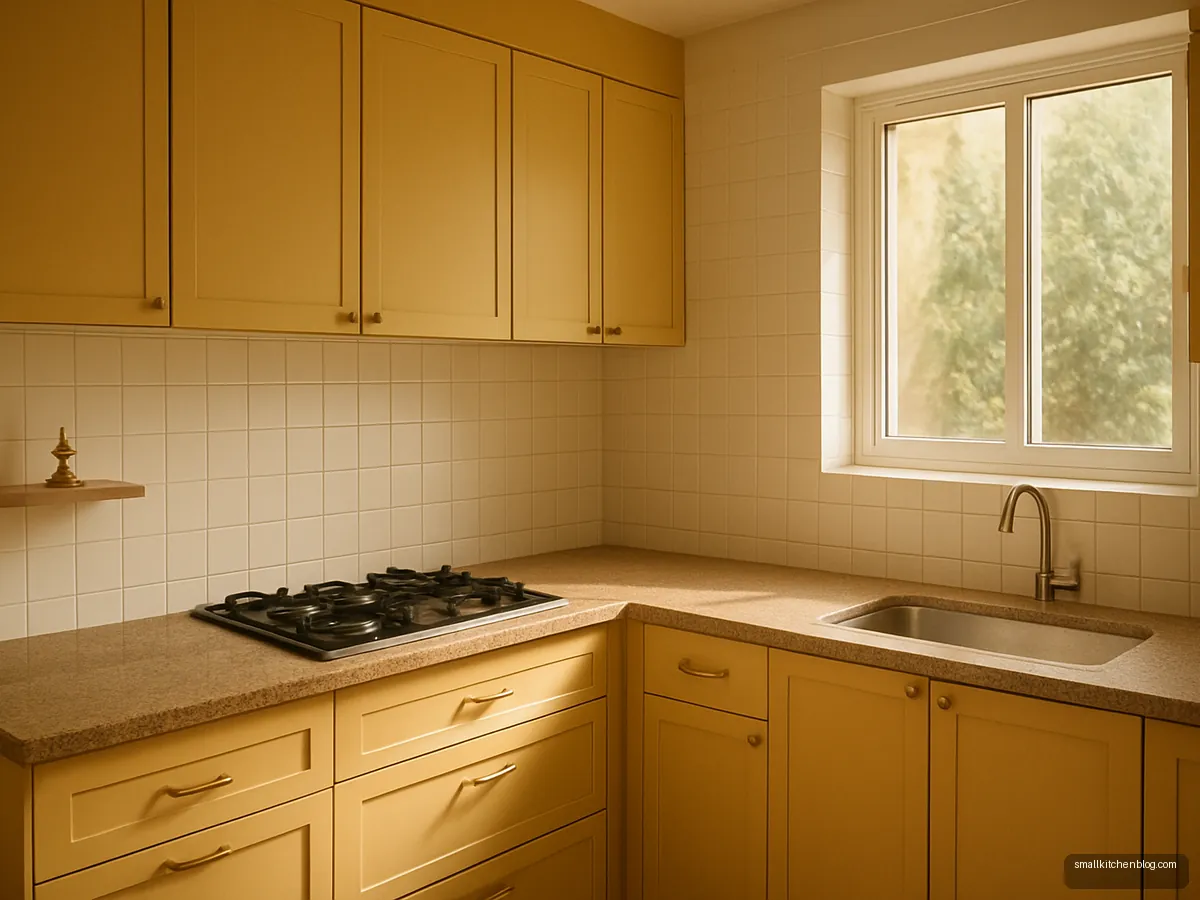
Southeast Corner Hob In Warm Yellow
Following the popular belief, the hob sits in the southeast corner with the cook facing east, and the cabinets are a warm yellow. Suits families who want a traditional layout. Keep the window beside the hob for ventilation too.

Sink And Stove On Separate Walls
Traditional belief keeps fire and water apart, so the sink and stove are on different arms of the kitchen. It is also practical: no splashes into hot oil. Suits L and parallel layouts.

Leaf Green Kitchen With Puja Shelf Nearby
Green is one of the colours some vastu sources suggest for kitchens. A small, separate puja niche outside the cooking zone keeps lamps away from cooking oil. Suits homes with daily prayers.

Northwest Kitchen In Terracotta Orange
Northwest is the usual alternative direction in popular vastu advice. This kitchen pairs terracotta orange shutters with natural stone. Suits flats where the southeast was not available.

East-Facing Cooking Wall With Window
The cook faces east, as tradition suggests, toward a window that brings morning light onto the counter. Whatever your beliefs, light on the work surface is good design. Suits independent homes.
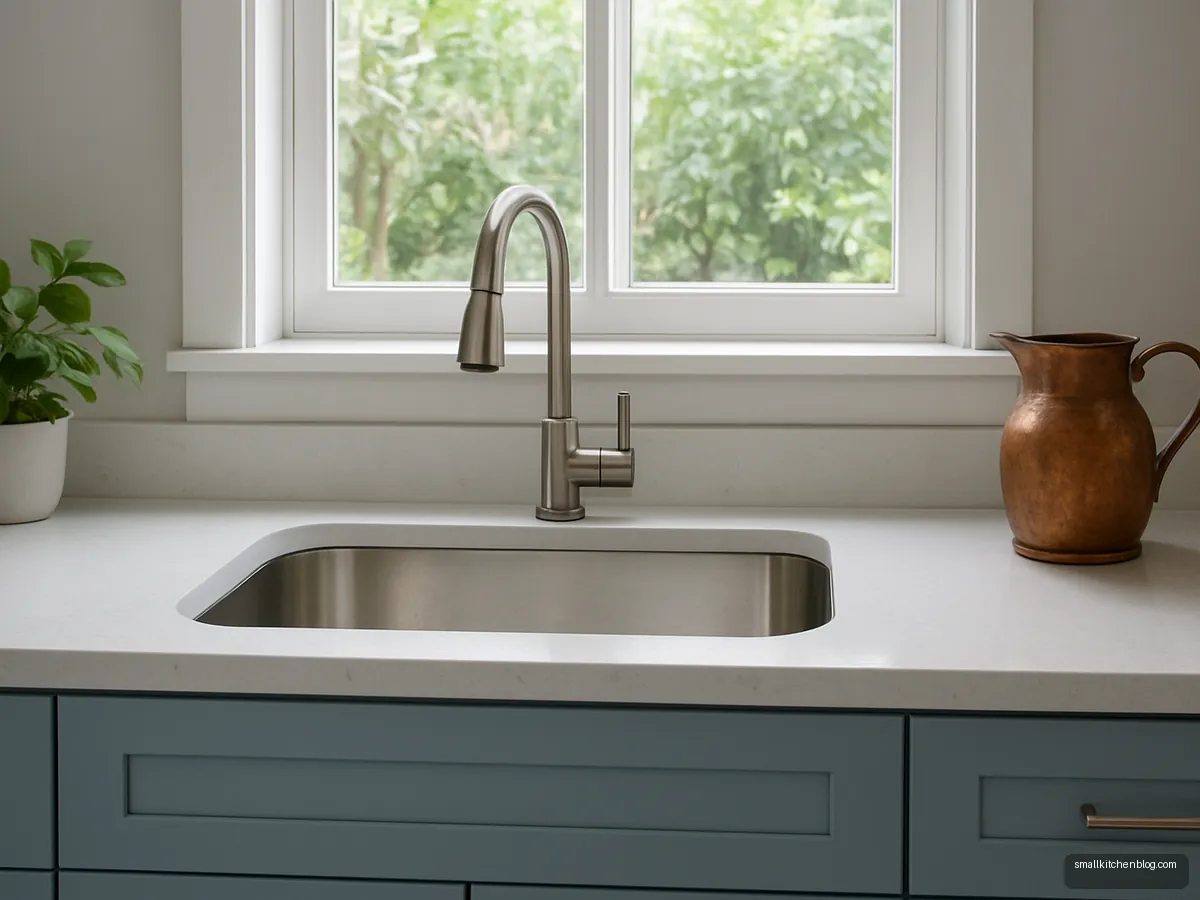
Sink Under Northeast Window
Popular vastu places water in the north or northeast; here the sink sits under a window on that side. Practically, a window above the sink is a great choice for daylight and drying. Suits most flats.
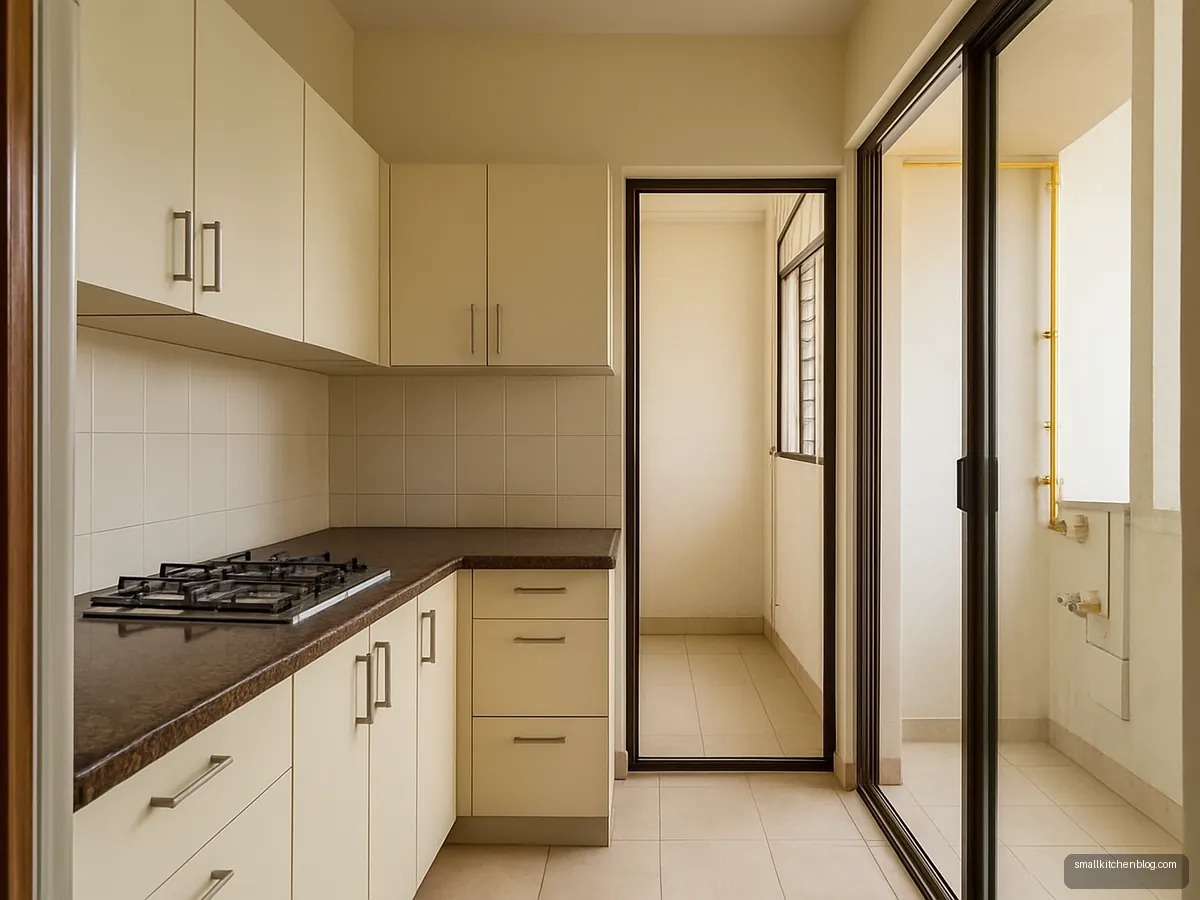
Cylinder Outside With Piped Gas Line
Some homes keep the LPG cylinder in a ventilated utility area with a fixed gas line in. That is a space and safety decision, not a vastu one. Only use a setup approved by your gas distributor, and get it checked regularly.

Earthy Red Accent With Clear Counter
Some sources suggest red or orange for southeast kitchens; this design uses a red accent on wall units with neutral bases. A clear counter keeps the kitchen calm in any tradition. Suits modern Indian flats.
Illustrative design concepts. Sizes, finishes and prices vary by maker and city, so confirm details with your designer or carpenter.
Vastu shastra is a traditional Indian system of beliefs about building layout and direction. Many families follow it when planning a home, and kitchen design as per vastu is one of the most searched topics. Vastu is a cultural tradition, not a science: there is no scientific evidence that direction affects health or prosperity. This page explains what popular vastu sources say, so you can make your own choice.
We keep safety separate on purpose. Gas, fire and electrical safety rules apply in every kitchen, whatever direction it faces. For layout ideas without the tradition, see kitchen interior design.
What popular vastu sources say about kitchen direction
According to popular vastu guides such as L&T Realty (January 2026) and Digit (September 2026), tradition holds that:
- The kitchen belongs in the southeast, called the Agni (fire) corner.
- Northwest is the usual alternative.
- North, northeast and southwest are to be avoided.
These are beliefs, not building rules. In apartments, the kitchen position is fixed by the builder, so most people adapt the layout inside the room instead.
Traditional stove, sink and cook placement
The same sources describe traditional preferences inside the kitchen:
| Element | Traditional belief |
|---|---|
| Stove | In the southeast part of the kitchen |
| Cook | Facing east while cooking |
| Sink | In the north or northeast |
| Stove and sink | Kept apart (fire and water) |
Some of this overlaps with good design for unrelated reasons. Keeping the sink and hob apart avoids water splashing into hot oil and gives you landing space; NKBA, a design body, recommends separate landing areas beside the sink and the cooktop. An east-facing window brings morning light, which helps anyone working at the counter.
Colours: where sources disagree
Vastu colour advice is not consistent. L&T Realty suggests yellow, orange or green. Digit suggests red or orange for southeast kitchens and says to avoid black, yet lists black stone as preferred in another place on the same page. When sources contradict each other, choose colours you like and that hide stains well; warm tones like yellow and terracotta happen to forgive turmeric. See kitchen colour combinations for practical pairings.
Vastu claims that are not building rules
Some vastu content mixes belief with numbers. Digit, for example, gives a "minimum kitchen size of 85 sq ft" as a vastu claim. This is not a building-code figure. Actual minimum sizes come from local bye-laws; GharPedia, in a secondary restatement of NBC 2016, gives a separate kitchen as 5.0 sq m with 1.8 m width, and local rules can differ. Treat vastu numbers as tradition, and code numbers as rules to check with your municipality.
Kitchen safety (applies whatever your beliefs)
This section is practical safety from the PMUY LPG consumer guidance booklet and oil companies, not vastu:
- Keep the LPG cylinder upright and the stove on a platform above cylinder level. Never keep the cylinder in a pit below floor level or inside an enclosed compartment.
- Do not fit shelves or storage cabinets above the hot plate.
- Use an ISI-marked hotplate and a Suraksha LPG hose, which has a life of 5 years. Keep it uncovered and visible, and replace it if cracked or before expiry.
- Turn the regulator off after use and every night.
- If you smell gas: close burners and regulator, put out all flames including lamps and incense, do not operate electrical switches, open doors and windows, and call your distributor or the 24x7 LPG emergency helpline 1906.
- Get the LPG installation checked every two years.
If a puja lamp or diya is lit in the kitchen, keep it well away from the hob and gas line. Faber India recommends 26 to 32 in between hob and chimney; under 26 in risks oil in collectors catching fire. More in our kitchen chimney design guide.
Balancing tradition and a practical layout
If you want to follow vastu but your flat does not allow it, families often adjust within the room: placing the hob in the southeast part of the kitchen, the sink on another wall, and keeping the counter clutter-free. None of these compromise safety or workflow. If a vastu suggestion conflicts with ventilation, gas safety or an approved plumbing line, put safety first. Browse L-shape kitchens and parallel kitchens, where separating the hob and sink is easy.
Frequently asked questions
Vastu ke hisaab se kitchen kis disha mein hona chahiye?
Popular vastu sources such as L&T Realty and Digit say tradition places the kitchen in the southeast (Agni corner), with northwest as an alternative, and north, northeast and southwest avoided. This is a traditional belief, not a scientific rule or a building code requirement.
Which direction should the cook face as per vastu?
Popular vastu sources say the cook should face east while cooking, with the stove in the southeast. This is tradition. Practically, facing a window or a well-lit wall helps whichever direction it is, because daylight on the counter makes cutting and cooking easier.
Can the sink and stove be next to each other in vastu?
Vastu tradition prefers keeping fire (stove) and water (sink) apart. Good design agrees for different reasons: separate landing space beside each, and no water splashing into hot oil. In small straight kitchens, a gap of counter between them is a reasonable compromise.
What colour is good for a kitchen as per vastu?
Sources disagree. L&T Realty suggests yellow, orange or green; Digit suggests red or orange for southeast kitchens and says to avoid black, while also listing black stone as preferred elsewhere. Pick colours you like and that hide stains, since the tradition itself is not consistent.
Is vastu for kitchen scientific?
No. Vastu is a traditional belief system and there is no scientific evidence that kitchen direction affects health, wealth or family harmony. Some vastu tips overlap with good design, such as daylight and separating sink and stove, but those benefits come from practical reasons, not direction.
Where should the gas cylinder be kept in the kitchen?
This is a safety question, not vastu. PMUY LPG guidance says keep the cylinder upright, with the stove on a platform above cylinder level, never in a pit below floor level or inside an enclosed compartment. Keep the Suraksha hose visible and get the installation checked every two years.
Sources: L&T Realty, Vastu for kitchen · Digit, Vastu remedies for kitchen · PMUY, LPG Consumer Guidance · IndianOil, 1906 helpline · Faber India, Installing kitchen chimney · GharPedia, Kitchen design standards · NKBA Kitchen Planning Guidelines. Figures checked 14 October 2026; prices and rates change, so confirm locally.