Kitchen Floor Tiles Design: Anti-Skid and Easy-Clean Picks
A kitchen floor gets oil, water, dropped steel vessels and mopping twice a day. Here is how to read slip and wear ratings, choose vitrified or ceramic, and pick a design you will not regret.
- Slip rating near sink
- R10 minimum (MaterialDepot)
- Wear rating for kitchens
- PEI IV
- Vitrified water absorption
- under 0.5%
- Ceramic water absorption
- 3 to 7%
- Vitrified 2 x 2 ft price
- Rs 60 to 110 per sq ft (InfraLens, Aug 2026)
14 Kitchen Floor Tiles Design ideas
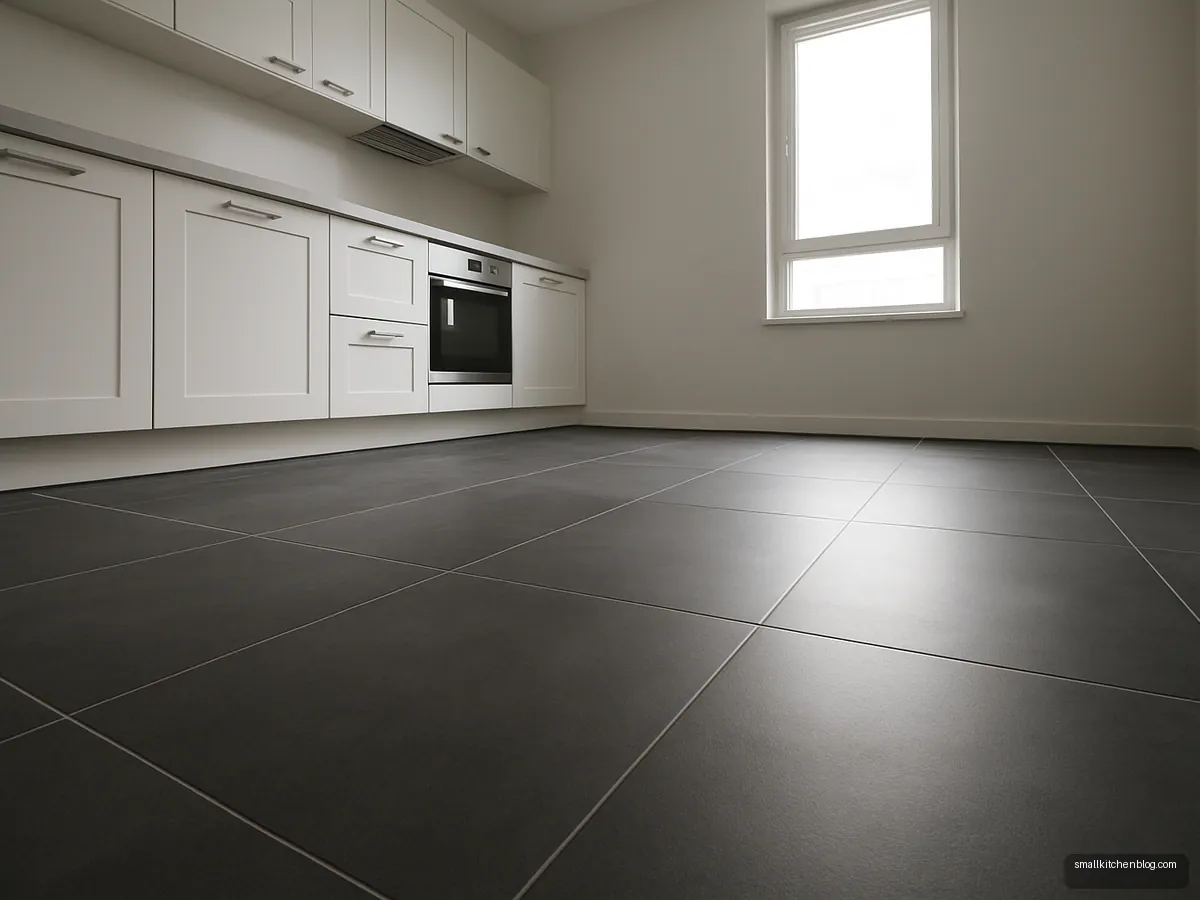
Matte Charcoal Large-Format GVT
Big 600 x 1200 mm matte charcoal tiles mean fewer grout lines to scrub after a dal spill. Dark tones hide stains in busy kitchens. Pair with light cabinets so the room does not feel heavy.
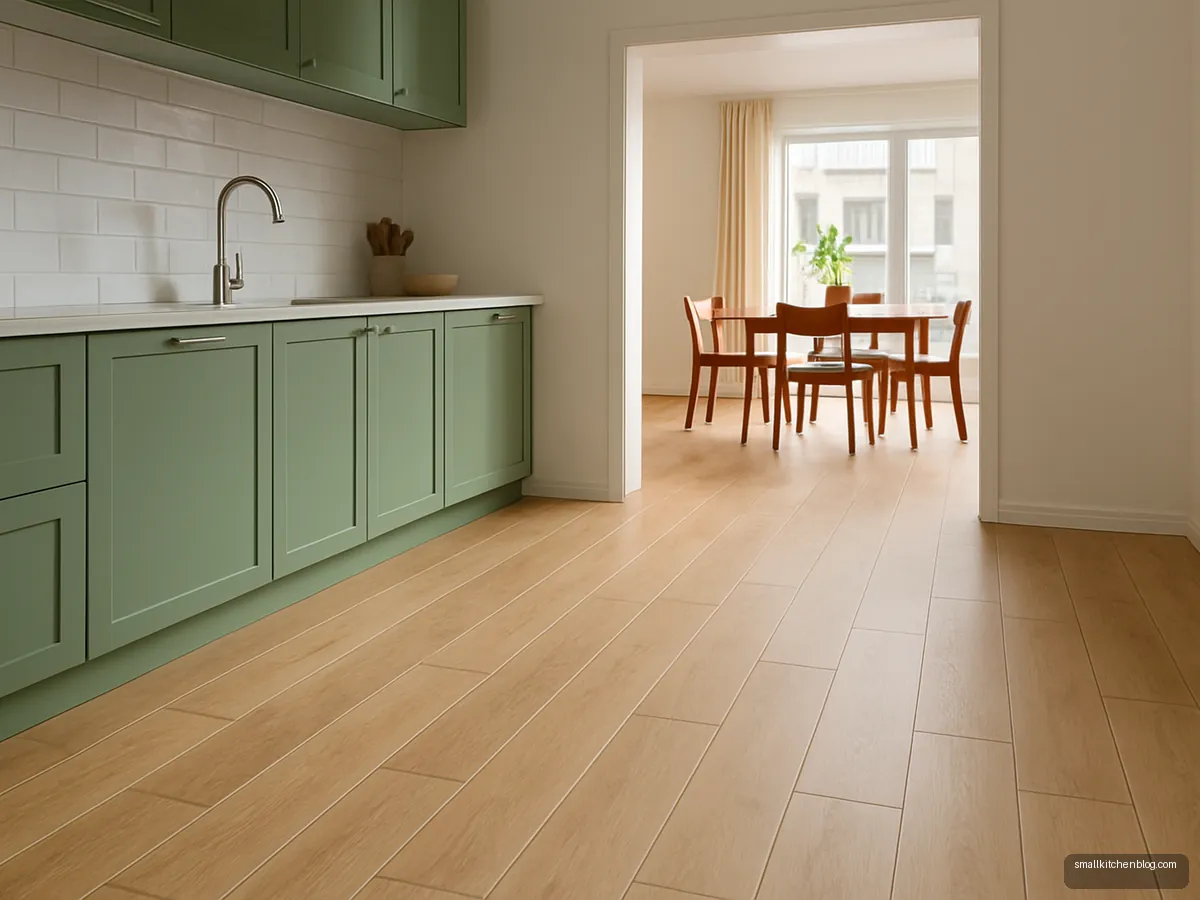
Wood-Look Plank Tiles
Wood-look porcelain planks give the warmth of timber without swelling when water spills. Suits open kitchens that share a floor with the living room. Choose a textured, anti-skid finish for the cooking zone.
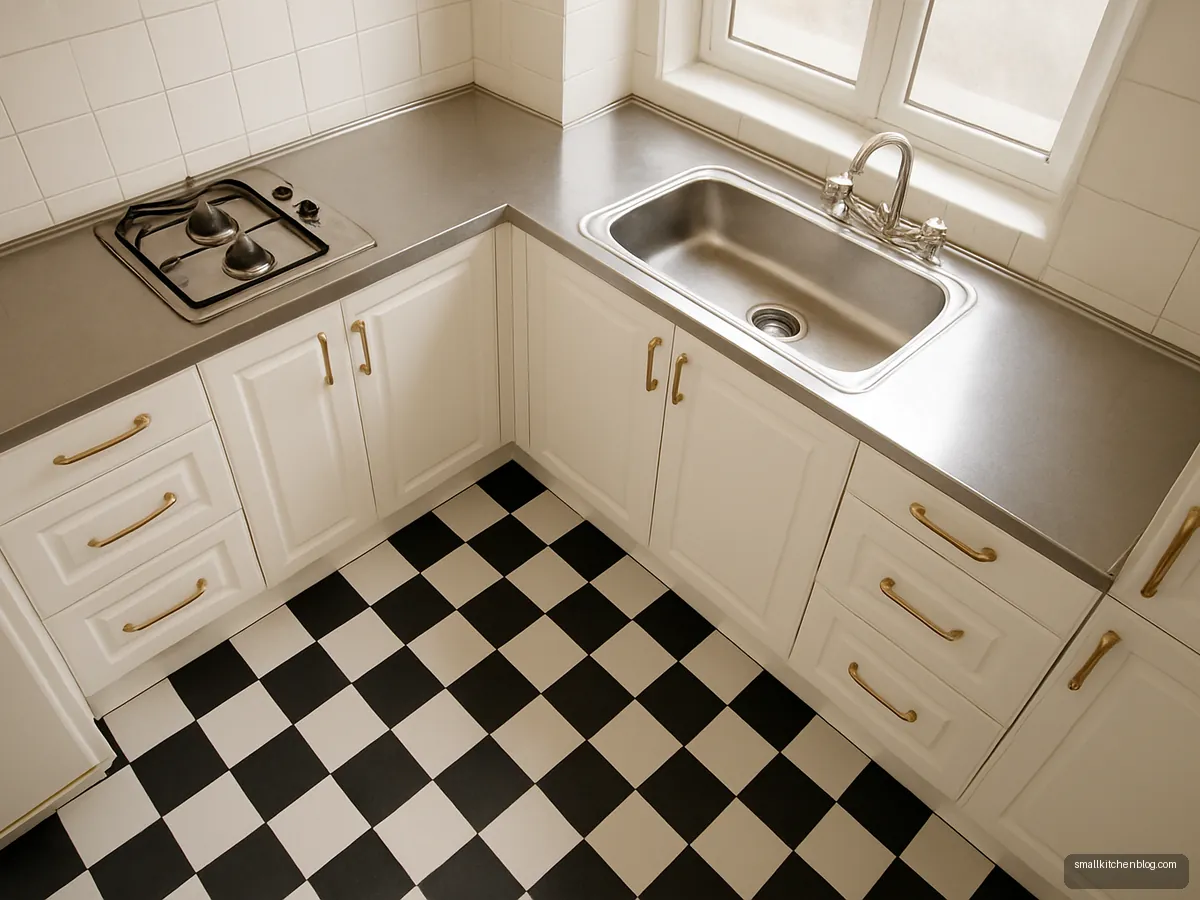
Black And White Checkerboard
A classic checkerboard in 300 x 300 mm tiles brings a retro charm to a small kitchen. It hides crumbs well. Keep cabinets plain white or a single soft colour to balance the pattern.
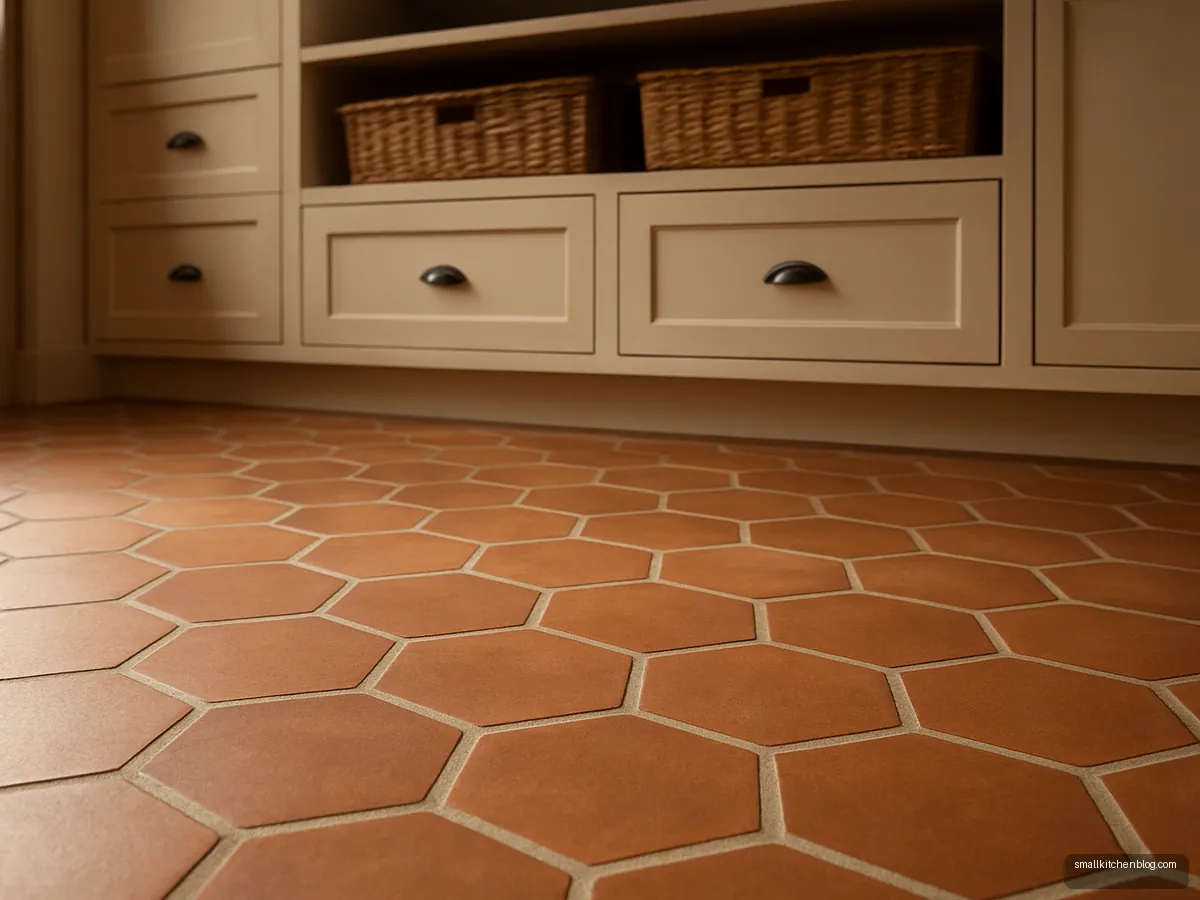
Terracotta Hexagon Floor
Terracotta-tone hexagons give an earthy, handmade look that suits Indian homes with wooden furniture. The warm colour forgives turmeric. Seal grout well because hexagons have more joints.
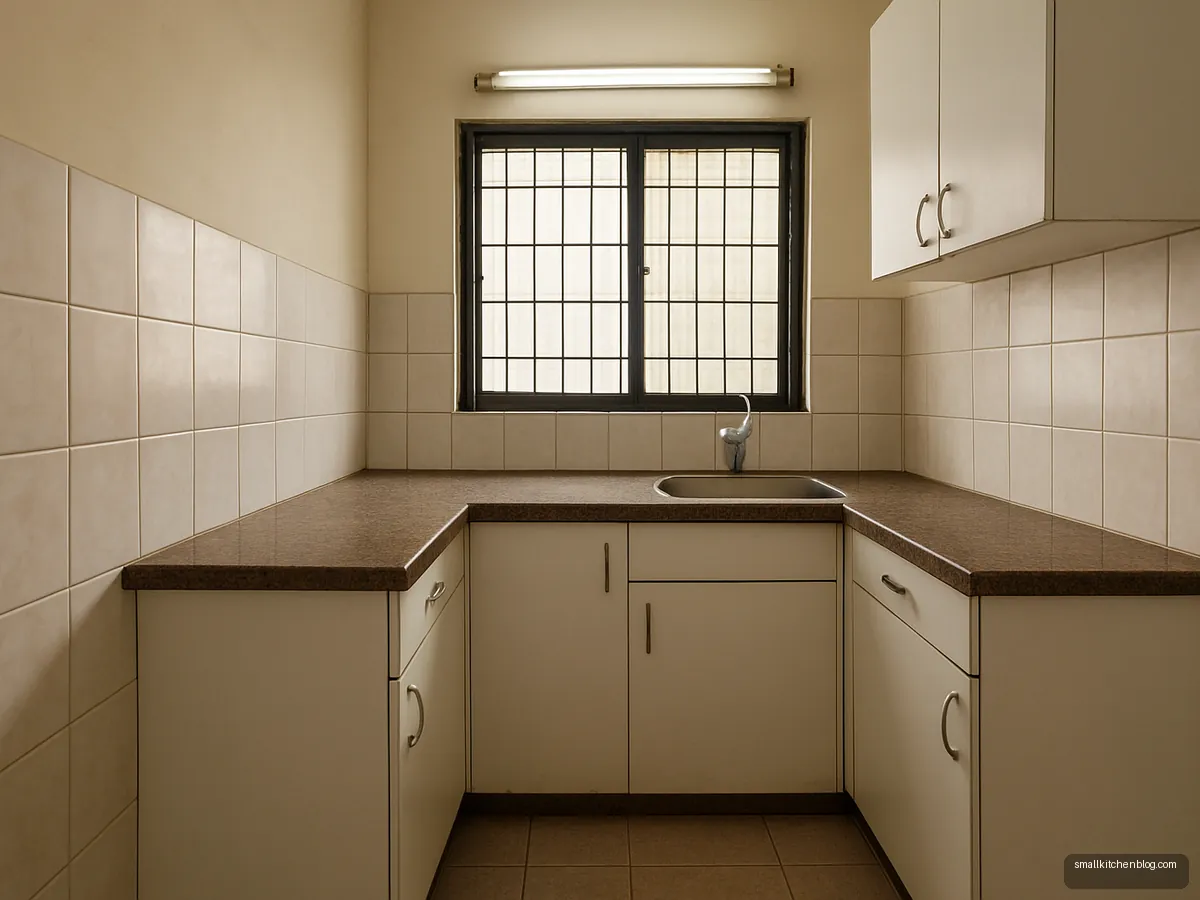
Beige Anti-Skid Ceramic For Budget
Beige textured floor tiles in 400 x 400 mm are a low-cost, practical pick for rented and older homes. They hide dust and stay grippy when wet. Check the box for a floor-grade rating, not a wall tile.
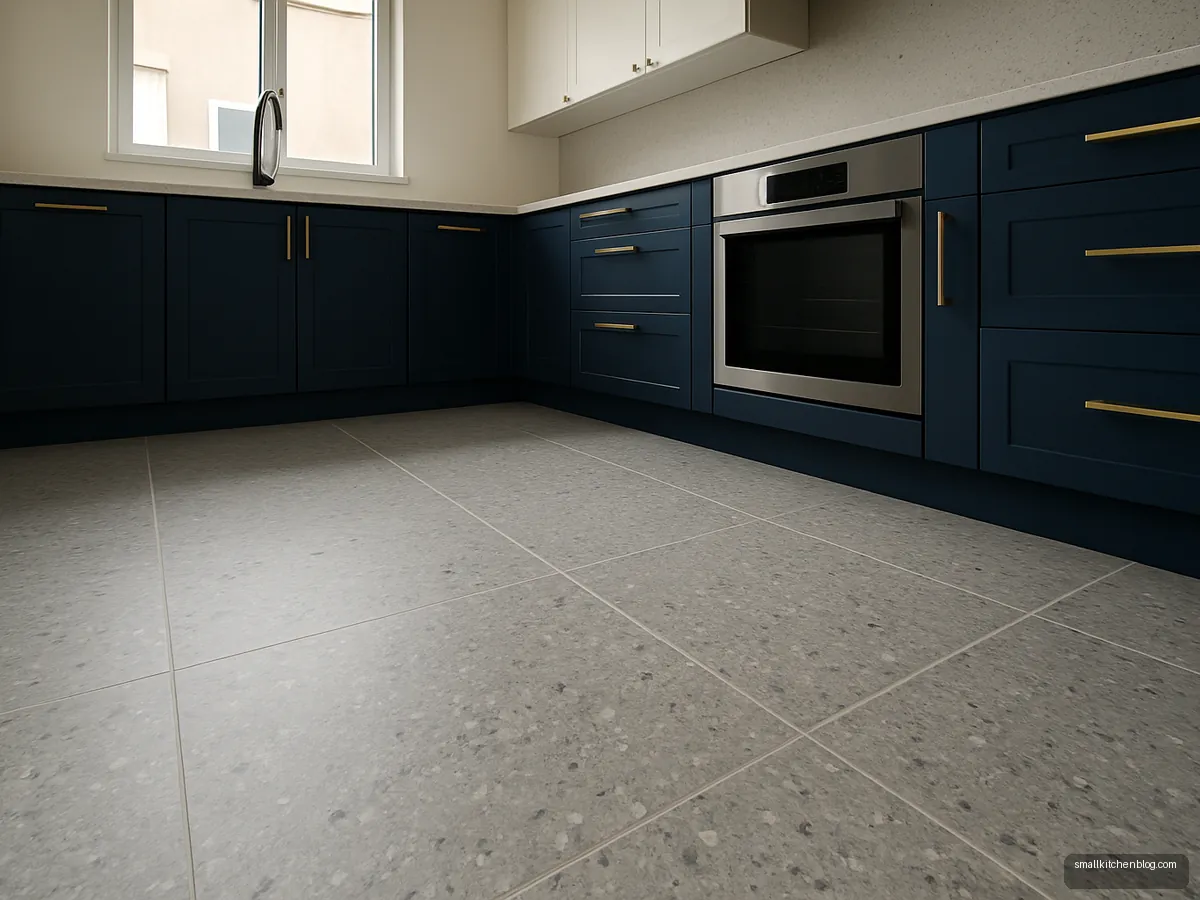
Grey Terrazzo-Look Porcelain
Terrazzo-look tiles add speckled texture that hides crumbs and spice dust between sweeps. Suits modern kitchens with plain cabinets. Use matte, not polished, so the floor stays safe near the sink.
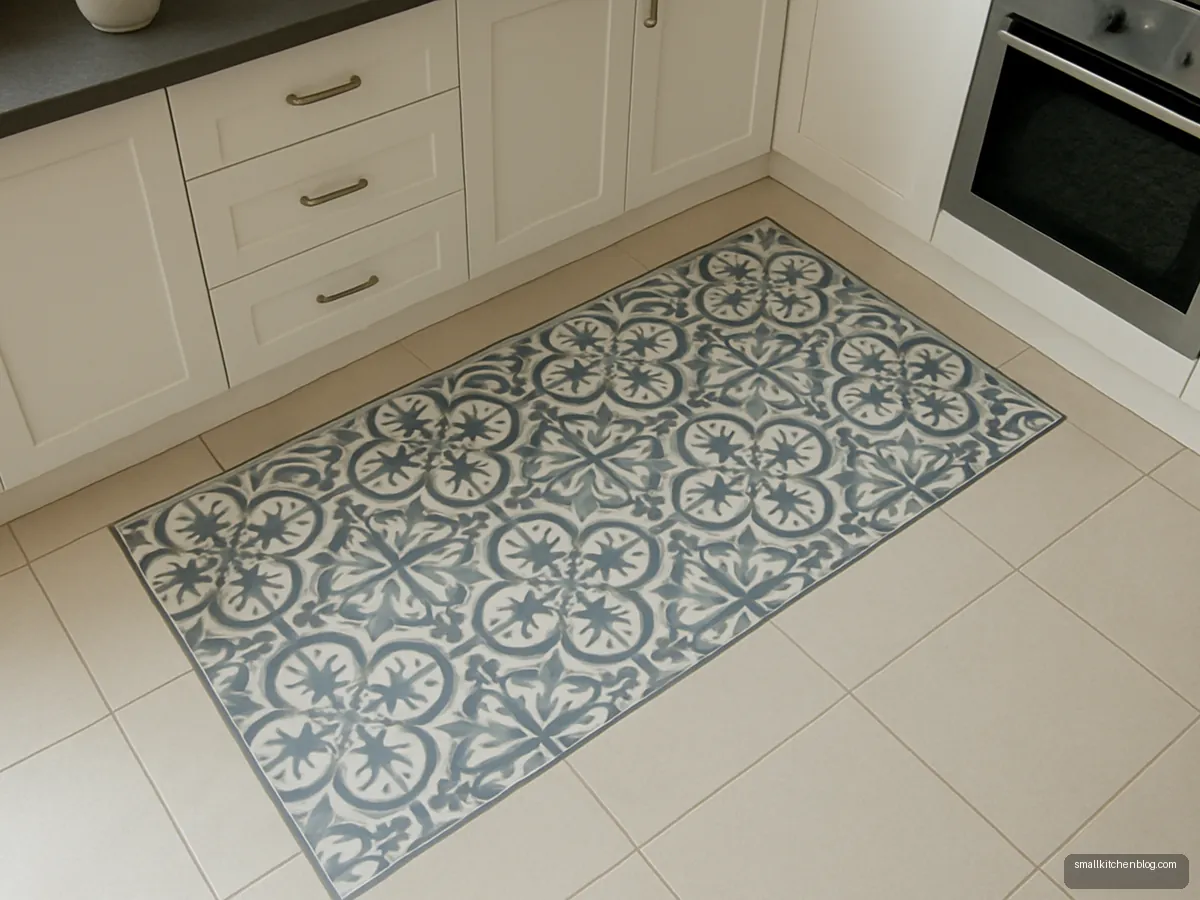
Patterned Cement-Look Border Rug
A patterned tile 'rug' in front of the counter and plain tiles elsewhere add character without overwhelming. Suits kitchens with plain cabinets. Place the pattern where you stand to cook so it hides wear.
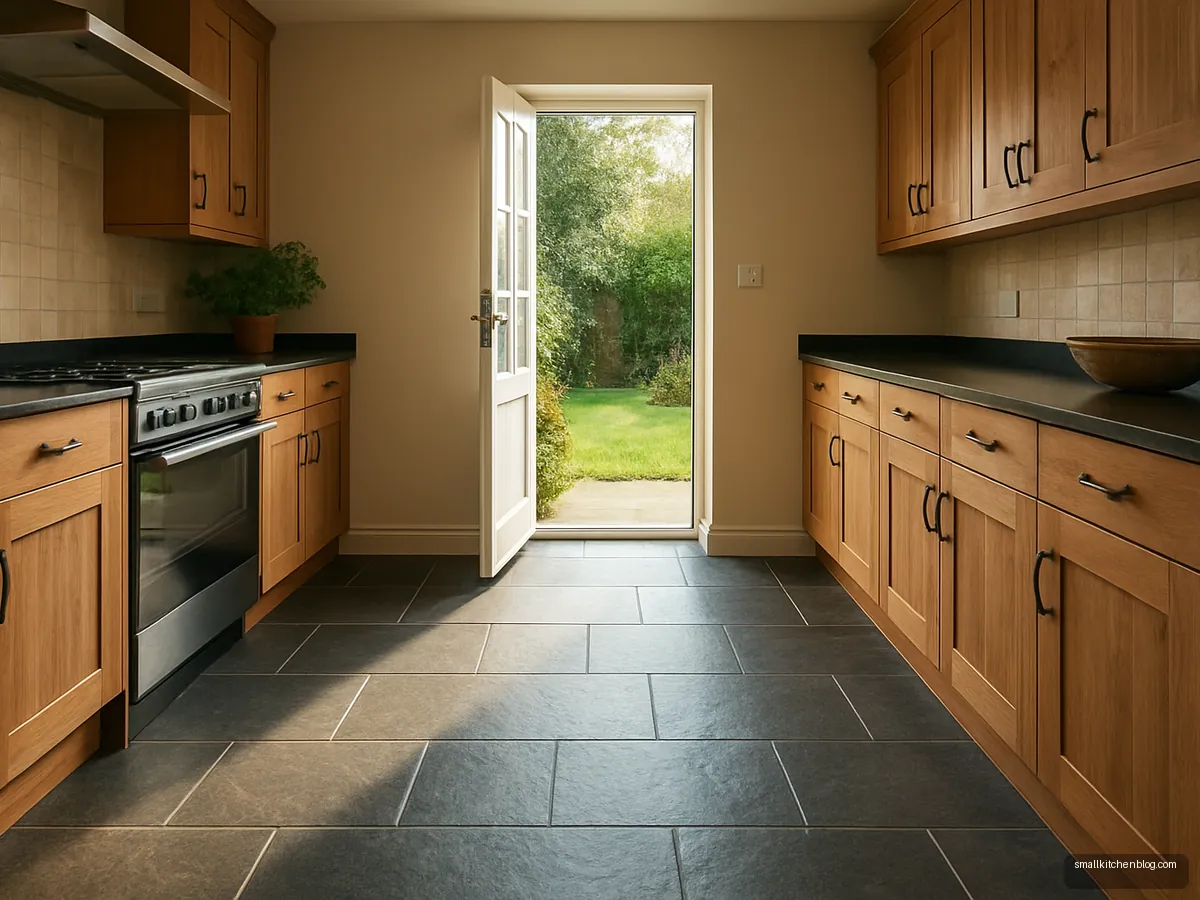
Slate Grey Stone-Look Floor
Slate-textured tiles feel like natural stone underfoot but are far easier to maintain. The texture adds grip. Good for bungalow kitchens with a utility door to the backyard.
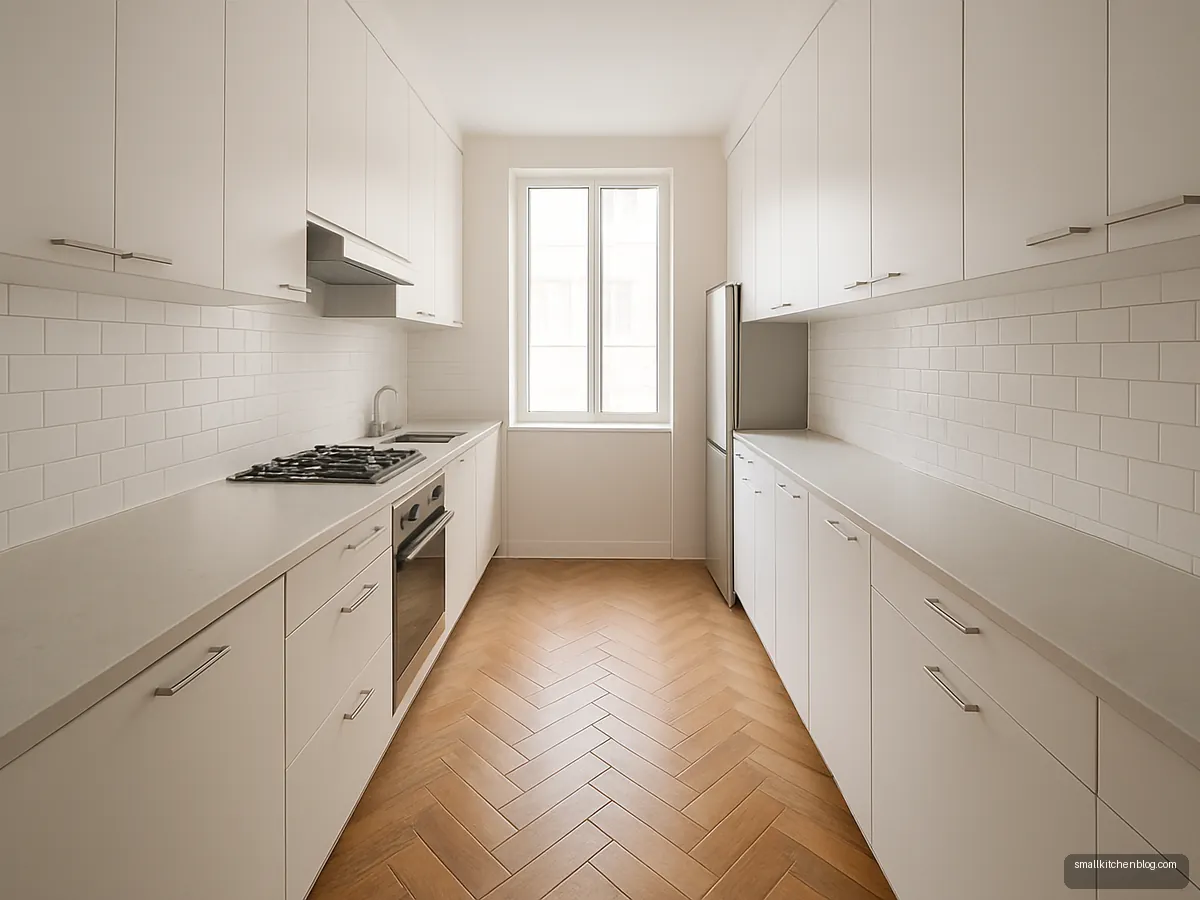
Herringbone Wood Tile In Galley
Herringbone wood-look tiles make a narrow galley look wider by drawing the eye across. Suits parallel kitchens. The pattern needs more cutting, so budget extra tiles for wastage.
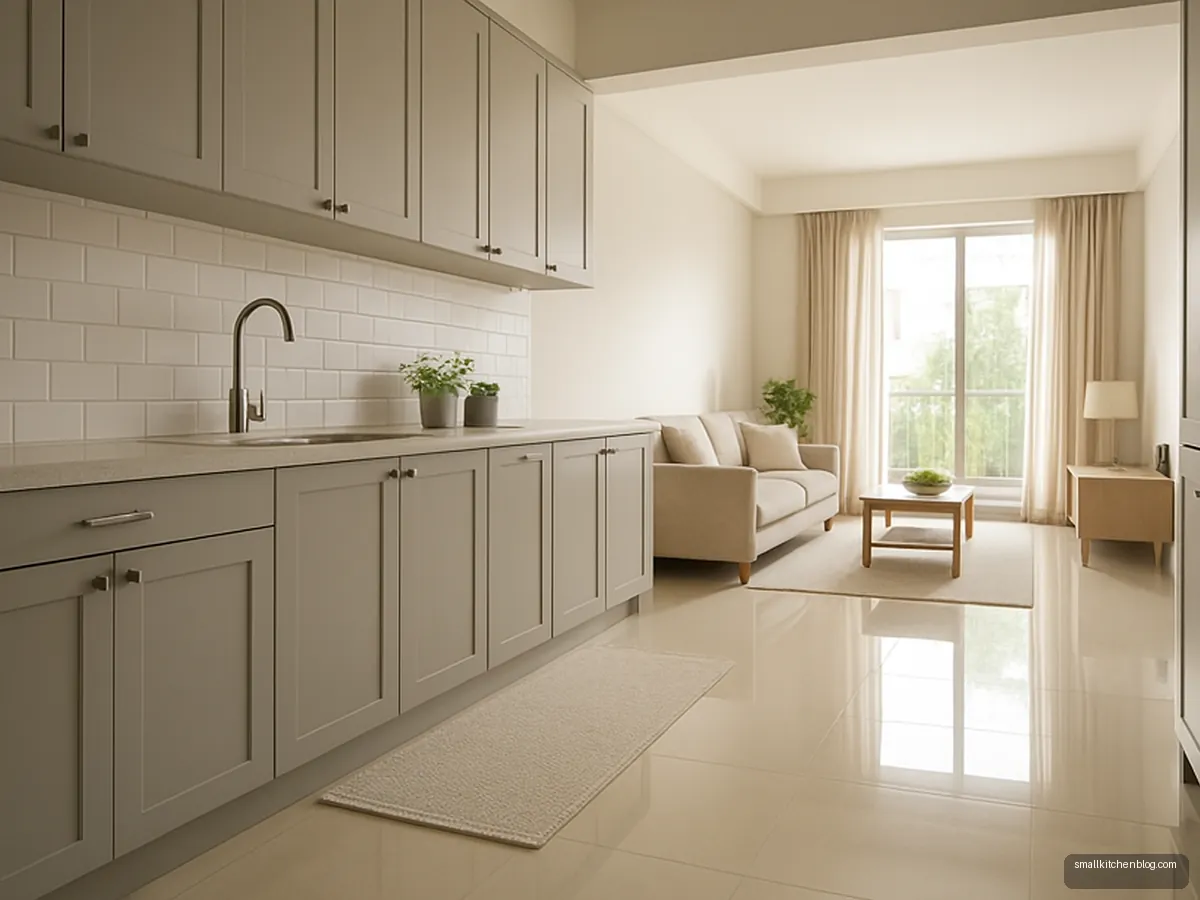
Cream Polished Vitrified With Runner Mat
Polished vitrified is bright and easy to mop, but slippery when wet. If you love the shine, use a washable runner mat at the sink and hob. Suits homes where the living room has the same floor.
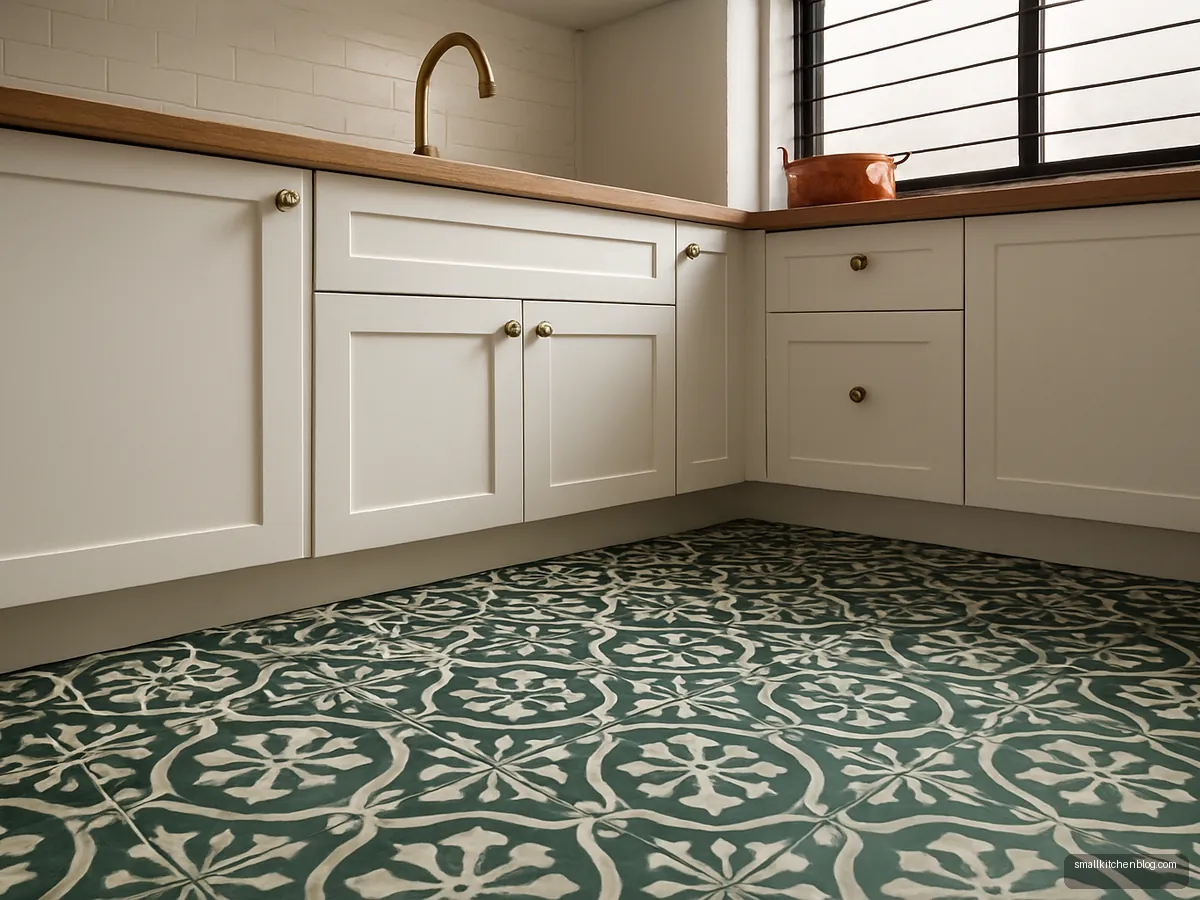
Green Encaustic-Look Floor Tiles
Deep green patterned tiles bring a bold heritage look to a small kitchen. Suits homeowners who keep cabinets simple. Check the tile is rated for floors, not decorative wall use.
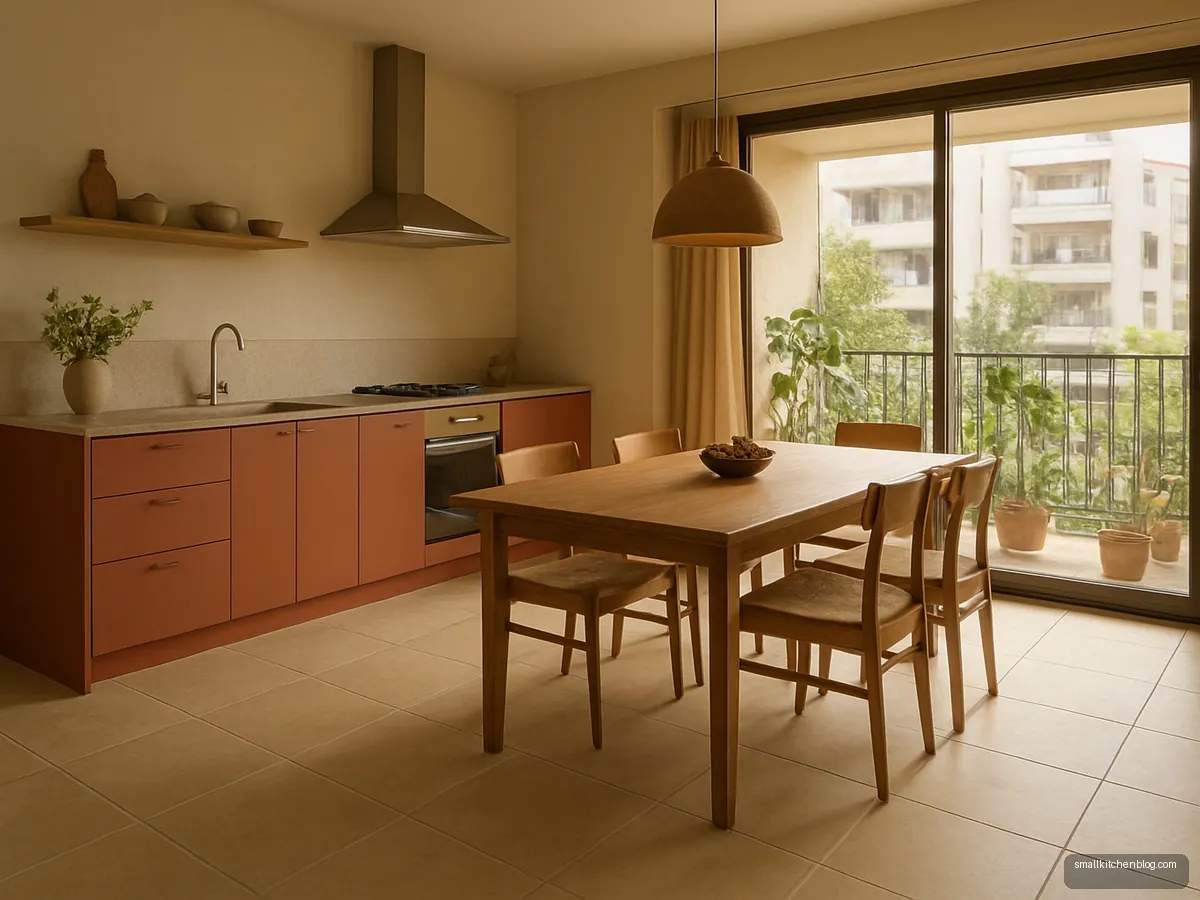
Sandstone Matte In Open Kitchen
A sandstone-tone matte floor runs smoothly from hall to kitchen and hides dusty footprints from balconies. Suits warm, earthy interiors. Use the same tile on the balcony for a seamless look.
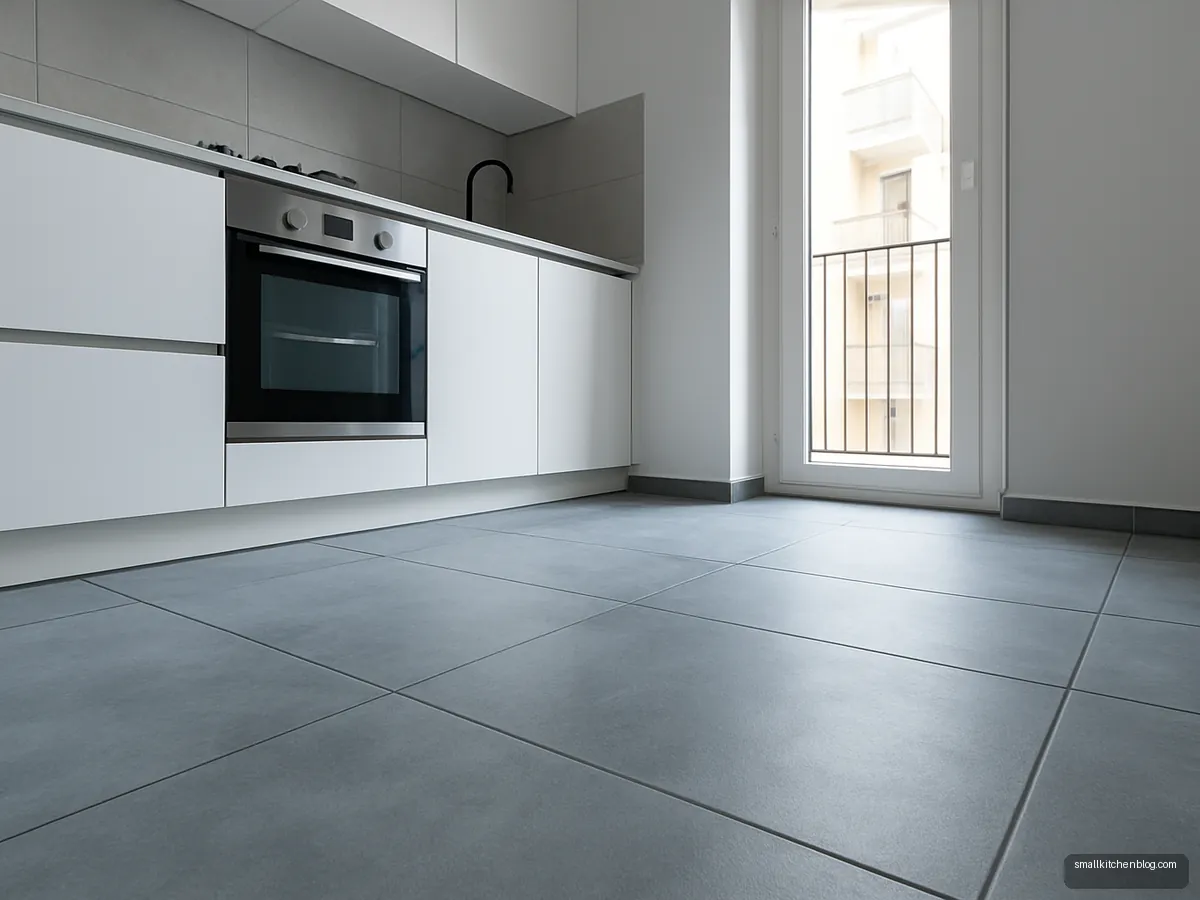
Blue-Grey Concrete Tile With Dark Grout
Concrete-look tiles with dark grout stay clean-looking for years in a busy kitchen. Suits industrial or modern looks. Ask for epoxy grout near the sink to resist stains.
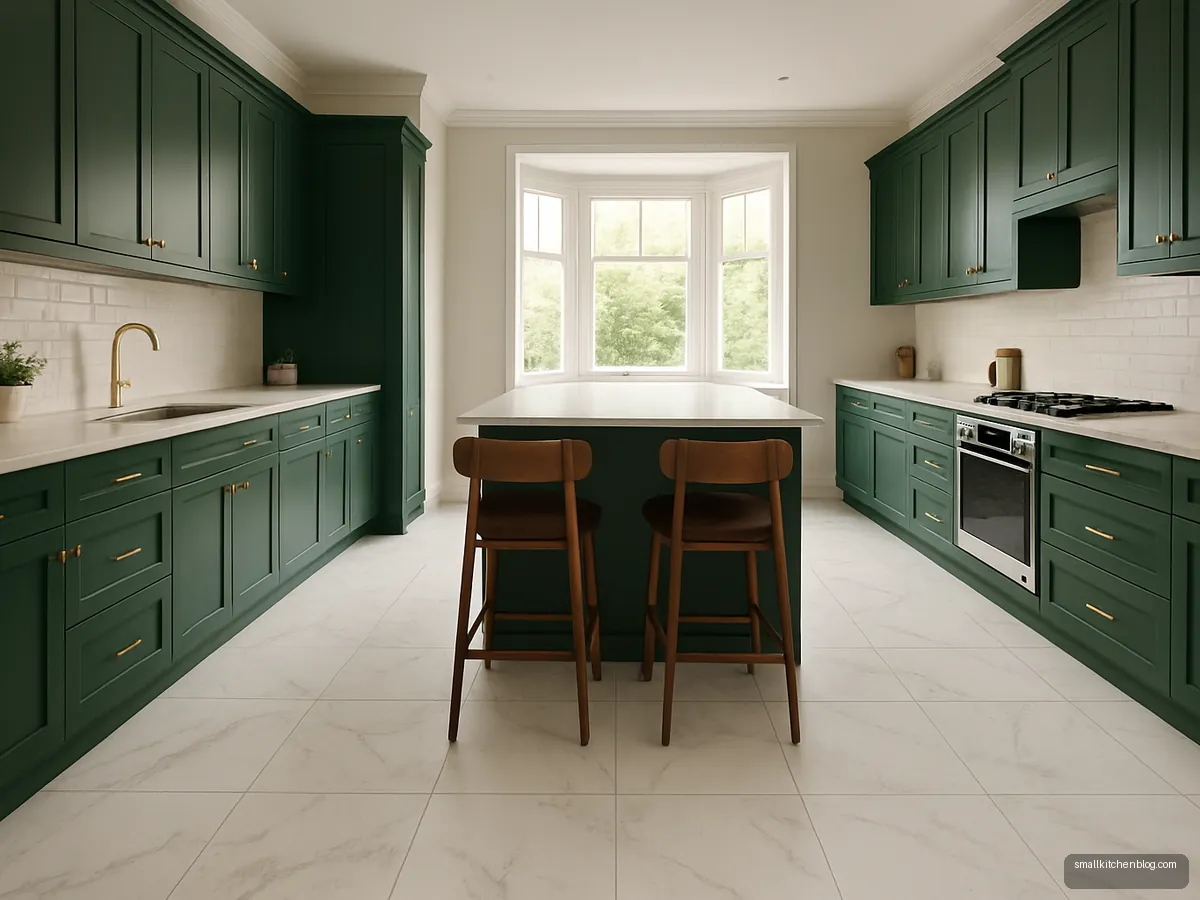
Marble-Look Matte Vitrified
A matte marble-look tile gives luxury veining without the etching and sealing that real marble needs. Suits premium kitchens. Choose the matte or satin version for grip near wet areas.
Illustrative design concepts. Sizes, finishes and prices vary by maker and city, so confirm details with your designer or carpenter.
The right kitchen floor tiles design is part safety decision, part style choice. An Indian kitchen floor sees oil splatter, spilled water from the sink, dropped pressure cooker lids and daily mopping with phenyl. A beautiful glossy tile that turns slippery near the sink is a bad trade.
Below we explain the two ratings to check (slip and wear), compare vitrified and ceramic, and cover sizes, grout and pattern ideas. For backsplash ideas, see our kitchen wall tiles page.
Anti-skid ratings: what R9, R10 and R11 mean
Slip resistance is measured on the German DIN 51130 ramp test and shown as an R number. MaterialDepot explains them like this:
| Rating | Typical use |
|---|---|
| R9 | Dry indoor areas |
| R10 | Residential kitchen floors near sinks (recommended minimum) |
| R11 | Showers and balconies |
| R12 | Commercial kitchens |
For a home kitchen, ask for R10 or better, at least in front of the sink and hob. Many Indian tile boxes do not print an R value, so ask the dealer for the spec sheet. Kajaria's kitchen tile page, for example, does not publish a PEI or R rating.
PEI wear rating
PEI rates how well a glazed surface resists wear from footfall. MaterialDepot lists:
- PEI I: walls only
- PEI II: light residential
- PEI III: residential floors
- PEI IV: high-traffic residential, including kitchens
- PEI V: heavy commercial
A wall tile laid on a kitchen floor will scratch and chip quickly. If the box says PEI I or II, it is not for your kitchen floor.
Vitrified vs ceramic for kitchen floors
MaterialDepot gives water absorption of 3 to 7% for ceramic and under 0.5% for vitrified (L&T SuFin gives ceramic as 3 to 6%). It also lists ceramic at 6 to 8 mm thick and vitrified at 8 to 12 mm.
- Vitrified (glazed, GVT or full body): denser, absorbs almost no water, resists stains. The better default for kitchen floors.
- Ceramic: more porous and thinner, better suited to walls and backsplashes.
Kajaria lists its kitchen floor range in glazed vitrified, GVT and polished vitrified, with ceramic for walls. InfraLens (August 2026) gives a headline price for 2 x 2 ft vitrified of Rs 60 to 110 per sq ft, with most cities at Rs 85 to 89; it does not say whether laying is included, so confirm with your contractor.
Matte, glossy or textured finish
Glossy polished vitrified looks bright and mops easily but becomes slippery with water or oil. Matte and textured finishes give more grip and hide footprints. A practical approach in open-plan homes is glossy in the living room and a matching matte version in the kitchen, or a washable runner mat at the sink if you want one floor throughout.
Choosing tile size
Kajaria lists kitchen tile sizes from 300 x 300 mm up to large slabs. How to choose:
- 300 x 300 mm or 400 x 400 mm: easy to lay around floor traps and odd corners in small or older kitchens; more grout lines.
- 600 x 600 mm: the common middle ground for 8 x 10 ft kitchens.
- 600 x 1200 mm and larger: fewer grout lines, cleaner look, but needs a very level base and skilled laying.
- Planks: wood-look strips; lay along the length of a galley to make it feel longer.
Grout and laying tips
Grout is where kitchen floors get dirty first. Use a darker grout than the tile in cooking zones, ask about epoxy grout near the sink, and insist on a slight slope towards any floor trap. Lay floor tiles before installing the modular kitchen so the plinth sits on the finished floor. Check the tile brand's spec sheet for slip and wear ratings before you buy, and keep a spare box for future repairs.
Matching floor with cabinets
Light cabinets suit a mid or dark floor, which grounds the room. Dark cabinets look best with a light floor. Wood-look tiles soften grey or white kitchens. If you have a patterned backsplash, keep the floor plain. For full schemes, see kitchen colour combinations, our main kitchen tiles design guide and small kitchen design ideas, or go back to the home page.
Frequently asked questions
Which tile is best for kitchen flooring in India?
Matte or textured glazed vitrified tiles suit most Indian kitchens. MaterialDepot gives vitrified water absorption under 0.5%, so they resist stains, and recommends R10 slip rating as a minimum for residential kitchen floors near sinks. Look for PEI IV for wear resistance.
Kitchen floor ke liye anti-skid tiles zaroori hain kya?
Yes, at least in front of the sink and hob, where water and oil collect. MaterialDepot recommends R10 as the minimum for residential kitchen floors near sinks. If you already have glossy tiles, a washable anti-slip runner mat is a cheaper fix.
Can I use ceramic tiles on a kitchen floor?
You can if the ceramic tile is floor-rated (PEI III or IV), but vitrified is usually better. MaterialDepot gives ceramic water absorption as 3 to 7%, compared with under 0.5% for vitrified, so ceramic is more porous and better suited to walls.
What size tile is best for a small kitchen floor?
600 x 600 mm works for most small kitchens and looks cleaner than small squares. In very tight or irregular kitchens with floor traps, 300 x 300 mm or 400 x 400 mm cuts more neatly. Large slabs need a perfectly level base.
What is the price of kitchen floor tiles?
InfraLens (August 2026) lists 2 x 2 ft vitrified tiles at Rs 60 to 110 per sq ft, with most cities around Rs 85 to 89. It does not state whether laying is included. Prices change by brand, city and finish, so take current dealer quotes.
Which colour floor tile hides dirt in a kitchen?
Mid-tone greys, beige, terracotta and speckled terrazzo-look tiles hide crumbs and spice dust best. Pure white shows every mark and pure black shows dust and water spots. Darker grout also helps the floor look clean longer.
Sources: MaterialDepot, Reading tile specs · MaterialDepot, Vitrified vs ceramic · L&T SuFin, Vitrified vs ceramic · Kajaria, Kitchen tiles · InfraLens, Tile prices. Figures checked 14 October 2026; prices and rates change, so confirm locally.